THE MOSOPISYEK OF BENET PROPOSE JOINT CONSERVATION OF ANCESTRAL LAND: CALL FOR DIALOGUE WITH UGANDA GOVERNMENT AND WILDLIFE AUTHORITY
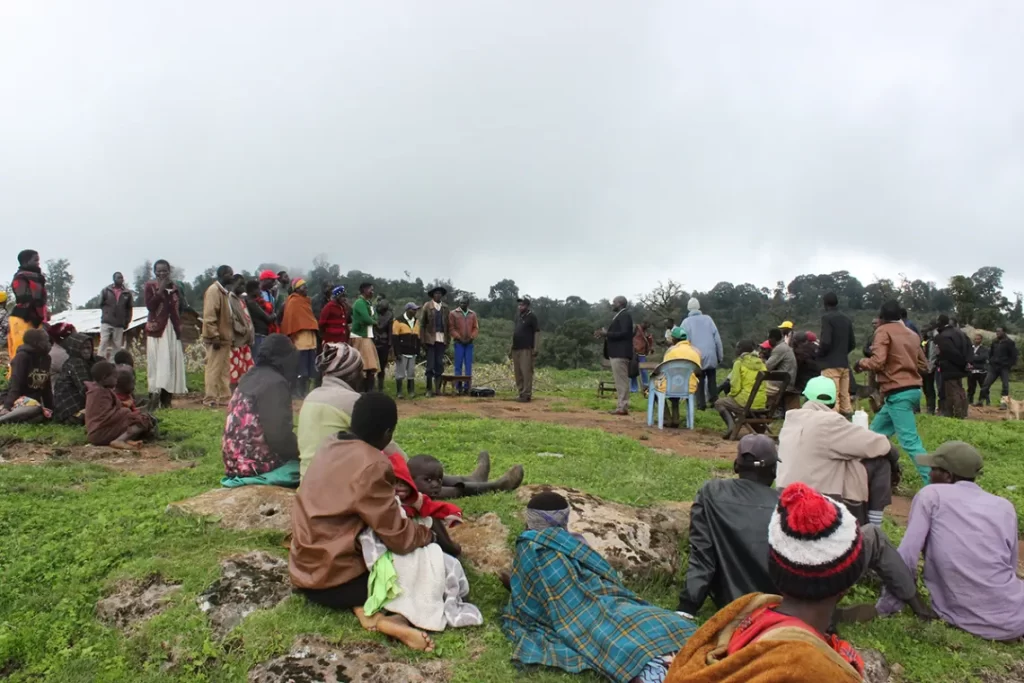
David Chemutai, coordinator of the Benet Mosopisyek community, declares that the eviction of the community from their ancestral land was illegal. And now, he says, “Whenever our community tries to access the ancestral land for resources and cultural issues, they face human rights abuses like torture,shootings, and illegal arrests.” Chemutai also mentions that three people were reportedly shot in November. The community coordinator is calling for dialogue and an end to the violence and the dispute with the government and the Uganda Wildlife Authority (UWA). “We need joint conservation. The community should be given a chance to conserve the forest.” However, after a number of meetings with UWA staff, including the Executive Director, and being asked to put the plan in writing, the proposal was rejected. The plan has now been presented to the Ugandan Prime Minister and the Minister of Tourism. Says Chemutai, “Instead of the government allowing the Mosop Benet Indigenous community to carry out joint conservation to save our forest, and handing over the 6,000 ha. of land meant for resettlement of Mosop Benet… demolishing our houses, destroying our crops and impounding our cattle is the order of the day.” Land is Life wholeheartedly supports the call for dialogue and Joint Conservation made by the Mosop Benet. We urge the Government of President Yoweri Museveni and Prime Minister Robinah Nabbanja, to enter into good faith dialogue and come to an agreement with the community; cooperation and Joint Conservation rather than violence, is the best way to ensure the vitality of the land. The violence and displacements, which are clear violations of the human rights of the Mosopisyek Benet people, have been going on too long, and conservation can never be an excuse for displacing Indigenous Peoples from their ancestral lands. The UWA, conservation, and violence The Mount Elgon National Park area of Uganda was home to the Mosopisyek of Benet (Mosop Benet) Indigenous People well before it was declared a forest reserve in 1920 by the British colonial administration. In 1968, six years after the British left, the newly independent Ugandan government declared the area a central reserve, and in 1993 named it Mt. Elgon National Park, all without the free, prior and informed consent of the Mosop Benet. Since the designation of the Mt. Elgon region as a conservation area in 1920, the Ugandan government has assumed primary responsibility for environmental protection, and it is this obligation that is being utilized by the Uganda Wildlife Authority (UWA) to justify displacing thousands, and preventing the Mosop Benet from accessing their ancestral lands and the sacred sites that are an essential element of their culture. The forced evictions from disputed areas led to legal action being taken against the Uganda Wildlife Authority, and while the resulting judgment recognized the rights of the community, and allowed them agricultural and grazing rights, the judgment was never implemented. As a consequence, the violence and displacements continue. According to a recent report published by the Mosop Benet community elders: “Since October 2022, the Benet Mosop have suffered escalating and relentless attacks carried out by Uganda Wildlife Authority (UWA) agents, including human rights violations such as shootings, rape, torture, burning and demolition of the houses and impounding of cattle. Since the institution of litigation, these attacks have become more frequent, more violent and accompanied by a heightened level of property destruction. UWA employs lethal force, either shooting or beating up community members found within the boundaries of the (Mount Elgon) Park or on its outskirts. The current attacks, characterized by their brutal and violent nature, have escalated the perilous threat of sustaining gunshot wounds, and even losing one’s life. Fourthly, in a bid to further intimidate the community, UWA agents are incessantly threatening BCMA’s leaders for daring to stand up for the rights of the community. Among the most grievous violations, on 28th December 2022, a 16-years-old Benet Mosop girl was raped by a UWA agent, and on 10th February 2023, a 45-year-old man was shot dead by rangers who had found him collecting firewood in Mt. Elgon forest. In fact, the exacerbated nature of these violent attacks caught the attention of government officials.” The Joint Conservation Proposal A Mosop Benet community proposal for Joint Conservation with the UWA includes, amongst others, the following recommendations: A system through which Mosopisyek observers are permitted to observe activities in each part of the park, to report unlawful users like poachers and those depleting our trees, and to track changes of the local ecosystem to know what is needed, based on historical knowledge. An initiative which specifically engages Mosopisyek of Benet as the protectors of the moorland, in conjunction with rights to access and use the grazing of the moorland in agreed ways, including limitations on stock, and a system of regulation by appointed clan cluster leaders. The launching of discussions to understand the problems of the present composition and settlement of the Benet Resettlement Scheme 6,000 ha. Gazzeted (set aside) for farming. This needs discussion between the Mosopisyek of Benet council of elders and government about how it can be handled, since it’s already occupied by majority Sabinys (People) and displacement will cause conflicts. The 2,250 ha above the 6,000 ha. is also a water catchment area. A discussion can be held on how to replant indigenous trees to combat climate change. Uganda TV Report: https://www.youtube.com/watch?v=cB5J0OqQZSM&authuser=0
A New Strategic Vision Rooted in Indigenous Leadership
By Luisa Castañeda-Quintana, Executive Director, Land is Life Across forests, deserts, savannas, rivers, and international negotiation rooms, I have witnessed the same truth repeated in different forms: Indigenous Peoples are already building the solutions the world keeps searching for. I have listened to Indigenous women defenders, like Alicia Cahuiya, as they described the constant threats against them and their territories, and the strength they draw from their peoples and families to continue resisting. I have heard Indigenous youth speak about the lack of opportunities forcing many to leave their communities, but also sharing the futures they are determined to create at home. I have witnessed leaders and entire communities mobilizing overnight to protect their lives from imminent threats. And I have stood in UN halls celebrating hard-won victories for Indigenous Peoples’ rights alongside those who fought tirelessly for them. Again and again, these moments prove what is undeniable: Indigenous Peoples are not waiting to be included in solutions. They are already leading them. Yet the systems surrounding them continue to lag behind. Despite significant recognition of Indigenous Peoples’ rights on paper, today we see that many remain unenforceable and some are just overlooked and replaced by a new “so-called” moral authority, excluding Indigenous Peoples from the decisions that impact their lands and futures. Conservation efforts advance, sometimes without consent. Indigenous defenders continue to face violence and assassinations. Climate pledges expand while direct funding for Indigenous Peoples remains minimal. Philanthropy is shading away, shrinking, and what remains is often concentrated on certain ecosystems, leaving behind equally vital territories such as savannas, deserts, and the Andes. It is within this context that we at Land is Life began asking difficult but necessary questions. What is the role of Land is Life amidst the geopolitical context, where uncertainty impedes clarity, rights are diminished, and philanthropy is shifting away? How can we continue walking hand in hand with Indigenous Peoples to cope with the scale of the challenges? In 2025, we embarked in this endeavour to reflect on these questions together as a coalition. The result is our 2026–2029 Strategic Plan. This Strategic Plan emerged through an open and collaborative process involving 107 coalition members representing 86 Indigenous Peoples across 27 countries. It reflects lived realities, shared analysis, and a collective vision for what must change. What we heard was clear: today’s reality calls for joining more efforts, striving for collective actions and more solidarity. It calls for transformation. This is why our new strategy marks a deliberate shift, from responsive programming to systemic transformation and positioning Indigenous-led solutions as central to climate resilience, conservation, and development. We are grounding our work in four interconnected priorities: protecting territories, ensuring the security of Indigenous defenders, strengthening governance (especially for Indigenous women and youth), and increasing influence over climate finance and resource decisions. But more importantly, we are changing how these priorities come together. Our strategy is built around three interconnected pillars: i) Territorial Defense and Crisis Response; ii) Governance and Leadership Support; and iii) Advocacy and Policy Influence. Together, these pillars function as a reinforcing system where each amplifies the others, moving power away from cycles of emergency response and toward Indigenous-controlled governance,enforceable rights and independent resources. When communities defend their territories, they generate knowledge, legitimacy, and urgency that must shape policy. When Indigenous Peoples’ governance is strong, communities are better positioned to sustain their territories and negotiate their futures. When policies and financial flows shift, they can strengthen, not bypass, Indigenous Peoples’ institutions. This is how change becomes systemic. At the heart of this strategy are two goals: First, to strengthen Collective Action & Strategic Advocacy, enabling Indigenous Peoples to act together, share lessons, and amplify influence for greater policy impact. Second, to enhance Strategic Positioning, ensuring Indigenous Peoples are recognized as decision-makers and rights holders, shaping local, regional, and global agendas while reducing dependency on external allies This is not a rhetorical shift. It is a practical one. Land is Life occupies a distinctive position within the Indigenous Peoples’ movement, bridging urgent territorial protection and long-term systemic change. We connect grassroots territorial defense and leadership strengthening with high-level advocacy. Through our partnerships, experience and vision, we are ready to expand Indigenous-led solutions and deepen their global impact. This position comes with responsibility and with opportunity. As we look toward the years ahead, this strategy is not only a roadmap for our coalition. It is an invitation:To funders: move beyond short-term, project-based support. Invest in Indigenous Peoples’ institutions, leadership, and long-term visions. To policymakers: align commitments with action. Ensure that Indigenous Peoples have direct access to decision-making spaces and the resources that shape their futures. To allies: stand in solidarity in ways that strengthen, not substitute, Indigenous Peoples’ leadership.What is positive is that the path forward is not uncertain. It is already being walked. Indigenous Peoples are not only on the frontlines of today’s crises. They are leading the way.
Water, Rights, and Indigenous Peoples: What’s at Stake in 2026
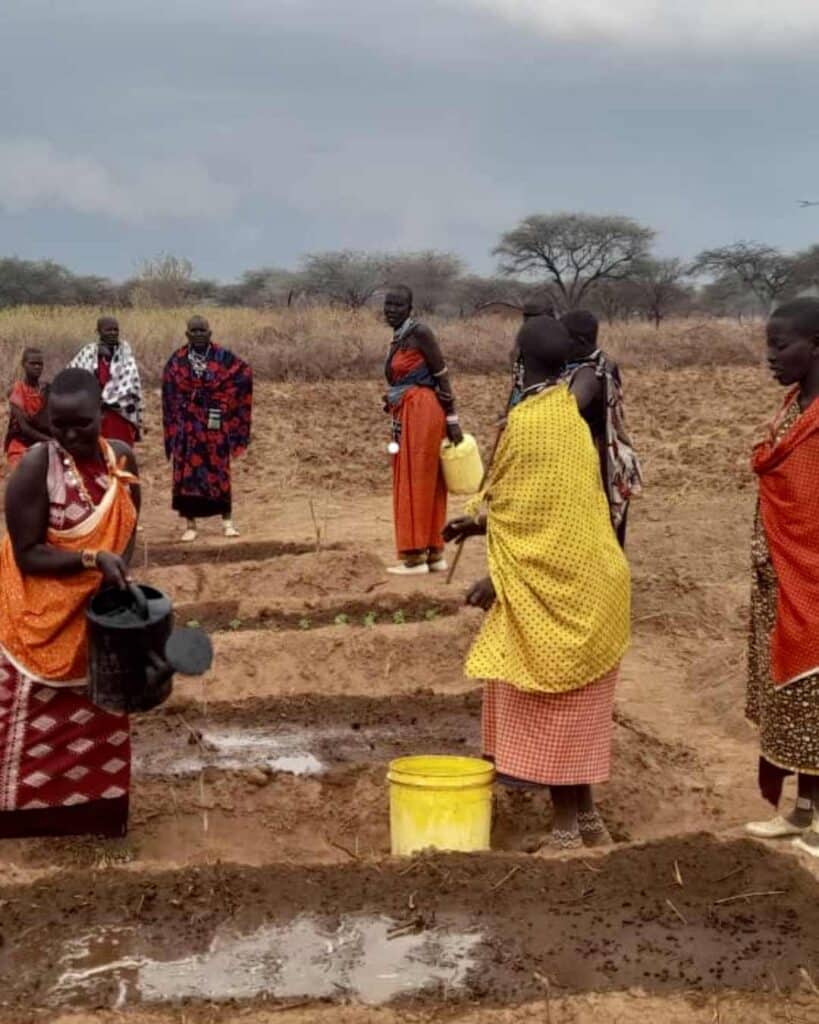
By Tania Eulalia Martínez-Cruz, Independent Researcher Ëyuujk World Water Day 2026, under the theme “Water and Gender,” and 2026 World Water Report, titled Water for All: Rights and Equal Opportunities underscores that when people lack the human right to safe drinking water and sanitation, inequalities deepen, disproportionately affecting women and girls. While this focus is important, it remains insufficient for Indigenous Peoples if it is not accompanied by a fundamental shift in who holds decision-making power over water. This year is a decisive moment for the global water agenda. Key milestones, including preparatory discussions held in Dakar and the upcoming UN Water Conference in December, are shaping global priorities on water governance, investment, and cooperation. Yet there are growing concerns about the direction of these processes. Indigenous Peoples and civil society have warned that current approaches risk prioritizing corporate and financial interests over human rights, while participation mechanisms for Indigenous Peoples remain limited and inadequate. This concern is not new. It reflects a longstanding pattern of exclusion across global water governance spaces. Indigenous Peoples continue to be marginalized from decisions that directly affect their territories, despite their critical role in sustaining the planet’s ecosystems. Although they represent only around 6% of the global population, Indigenous Peoples manage a significant share of the world’s biodiversity and manage vast areas of land, including some of the most ecologically intact regions. Evidence consistently shows that these territories have higher biodiversity and lower rates of environmental degradation. This is not a coincidence, it is the result of deeply rooted knowledge systems and governance practices developed over generations. For Indigenous Peoples, water is not merely a resource; it is a living entity and a common good, central to cultural, spiritual, and physical survival. Across diverse regions, from the Amazon to the Arctic, Indigenous worldviews emphasize a relationship of reciprocity and responsibility with water and the broader environment. For the Zenú people in northern Colombia, the origin of the world and time begins with water. For Ëyuujk communities in Oaxaca, springs are sacred sites where authorities ritually wash their staff of office when assuming and leaving leadership, making water the link between political governance and spiritual life. For the Awajún people in the Peruvian Amazon, rivers are a home defended with life itself. For the Sámi peoples in the Arctic, the quality of snow determines reindeer migration and, with it, the course of community life. For the Maasai in Kenya’s savannas, seasonal water flows shape pastoral cycles, food systems, and culture throughout the year. Yet these systems are increasingly under threat. Large-scale extractive industries, hydropower projects, and agribusiness expansion continue to drive water contamination, ecosystem destruction, and the displacement of Indigenous Peoples’ communities, often without Free, Prior and Informed Consent. At the same time, the global push for a “green” energy transition is intensifying demand for critical minerals. Decarbonizing the global economy requires minerals such as lithium, cobalt, manganese, graphite, and copper. Research published in Nature Sustainability shows that more than half of global energy transition mineral projects are located on or near Indigenous Peoples’ and rural communities’ lands; in Latin America and the Caribbean, this rises to 73%. Moreover, 62% of these projects are in areas facing high water risk. Water insecurity is frequently framed as a technical challenge requiring expert solutions. However, this technocratic approach avoids naming the structural causes of the problem, and those responsible for them. Unequal power relations, extractivist models, and the systematic marginalization of Indigenous governance systems. The issue is not simply about infrastructure or management; it is about rights, justice, and who gets to decide. Indigenous women are at the center of this crisis. As traditional custodians of water in many communities, they hold critical knowledge about ecosystems and resource management. Yet they face disproportionate burdens when water becomes scarce or contaminated and are often excluded from decision-making processes. Addressing gender and water, therefore, requires more than recognition, it demands concrete mechanisms to ensure their leadership and participation. Despite these challenges, Indigenous Peoples continue to defend water through community-based governance systems, including collective decision-making, biocultural knowledge, and sustainable management practices. However, these systems are often overlooked or undermined by state policies, and the right to Free, Prior and Informed Consent is too often reduced to a procedural formality rather than a substantive right. The risks are high, and the stakes are global. The biodiversity and ecosystems that Indigenous Peoples protect are essential for regulating the planet’s water cycles and ensuring long-term water security. There can be no meaningful response to the global water crisis without recognizing and supporting the rights and leadership of those who sustain these systems. Ultimately, addressing water justice requires a shift in perspective: from viewing Indigenous Peoples as stakeholders to recognizing them as rights-holders and decision-makers. It requires moving beyond rhetoric toward enforceable rights, genuine participation, and long-term support for Indigenous governance systems. Without Indigenous Peoples at the center, global efforts on water, climate, and biodiversity will continue to fall short. With them, there is a pathway toward more just, sustainable, and resilient futures.
The Rise of the Indigenous Movement in Asia: A Struggle for Rights and Recognition
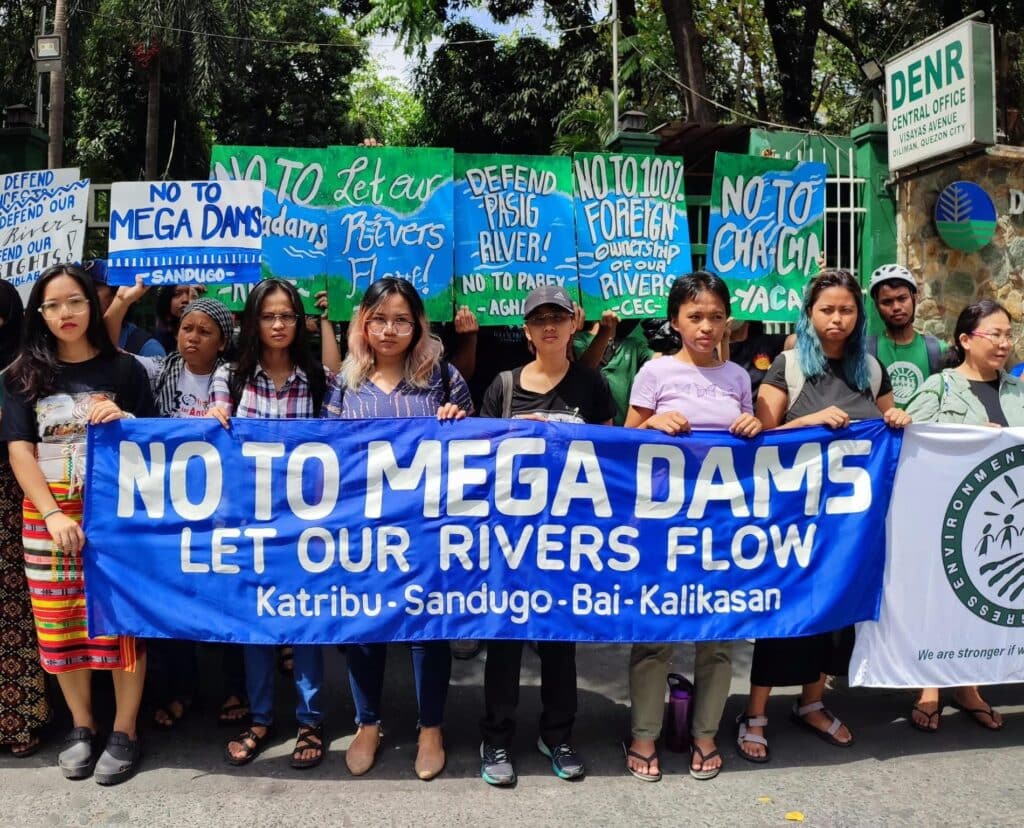
By: Bestang Dekdeken, Land is Life Asia Coordinator Asia is home to an estimated 260 to 411 million Indigenous Peoples, around two-thirds of the global Indigenous population. These Peoples represent over 2,000 distinct civilizations and languages and inhabit diverse ecosystems, including mountains, plateaus, coastal areas, deserts, and rainforests. Their ways of life are deeply rooted in unique relationships with their ancestral lands and territories. However, the concept of “Indigenous Peoples” remains contentious across much of Asia. Many governments reject the term and instead use alternative classifications such as “hill tribes,” “ethnic minorities,” “minority nationalities,” “scheduled tribes,” “Adivasi,” or Masyarakat Hukum Adat. These terminologies often strip Indigenous Peoples of their distinct identity and deny them the specific rights recognized under international law. Although nearly all Asian countries, except Bangladesh, voted in favor of the United Nations Declaration on the Rights of Indigenous Peoples (UNDRIP) in 2007, few have implemented it. Most States have yet to officially recognize Indigenous Peoples or fulfill their obligations under the declaration. Even in countries with legal frameworks, such as the Philippines’ Indigenous Peoples’ Rights Act, Indigenous Peoples continue to face systemic human rights violations, land dispossession, discrimination, and denial of self-determination. The modern Indigenous Peoples’ movement in Asia began to take shape in the early 1980s. In the Philippines, they mobilized effectively against Martial Law and a World Bank-funded dam in the Cordillera region. In Malaysia, protests against deforestation in the late 1980s spurred the growth of Indigenous Peoples’ resistance. Similar movements later emerged across the region in response to neo-colonialism, authoritarianism, extractive industries, and the erosion of Indigenous Peoples’ land rights. In 1992, the formation of the Asia Indigenous Peoples Pact (AIPP) marked a key milestone, providing a regional platform to strengthen unity, solidarity, and advocacy among Indigenous Peoples’ movements. Other regional networks followed, including the Asia Young Indigenous Peoples Network, Asia Indigenous Peoples’ Network on Extractive Industries and Energy, Indigenous Peoples Human Rights Defenders Network, and Land is Life. These alliances support community-led efforts to defend land, territories, and the right to self-determination. Asian Indigenous leaders have also played a vital role at the international level. They were instrumental in shaping global advocacy spaces such as the UN Permanent Forum on Indigenous Issues, the Expert Mechanism on the Rights of Indigenous Peoples, and the Special Rapporteur on the Rights of Indigenous Peoples. Their sustained engagement contributed significantly to the drafting and eventual adoption of UNDRIP in 2007. Today, the Indigenous Peoples’ movement in Asia continues to grow, grounded in collective resistance, cultural survival, and solidarity. Despite progress, the struggle for genuine recognition, rights, and justice remains urgent, and far from over.
Anchoring the power of consent in Indigenous FPIC protocols

By: Binota Dhamai, Member EMRIP Consent has long been a foundational practice within Indigenous communities, grounded in their inherent relationships to their lands and territories and governed by their own systems of law and decision-making. Long before the imposition of colonial borders and legal frameworks, Indigenous Peoples maintained sovereignty over their lands, upheld their own laws, and protected their territories. These governance systems are not relics of the past—they are dynamic, evolving, and vital structures that must be respected as legitimate expressions of Indigenous law, diplomacy, and self-governance. The concept of Free, Prior and Informed Consent (FPIC), as recognized under international human rights law, reflects these inherent rights. FPIC is a living expression of Indigenous Peoples’ rights to self-determination, self-government, and control over their lands, territories, resources, and ways of life. These rights are affirmed in the United Nations Declaration on the Rights of Indigenous Peoples (UNDRIP), ILO Convention No. 169, and other human rights instruments. However, in practice, States and corporations often misinterpret, minimize, or ignore FPIC. Too frequently, it is reduced to a mere consultation process, rather than acknowledged as a binding right to grant or withhold consent. In response, Indigenous-led FPIC protocols have emerged as mechanisms through which Indigenous communities assert authority over their own consent processes, rooted in their cultural, legal, and political traditions. FPIC is grounded in the principle that Indigenous Peoples have the right to decide what happens on their lands and with their resources. According to the Expert Mechanism on the Rights of Indigenous Peoples (EMRIP, 2018), the term “free” implies the absence of coercion or manipulation; “prior” requires that consent is obtained before project implementation; and “informed” demands that all relevant information be provided in a culturally appropriate and accessible format. Most importantly, “consent” means Indigenous Peoples hold the final authority to approve or reject any project. Indigenous-led FPIC protocols reinforce such principles by ensuring that these processes are directed by Indigenous communities themselves. These protocols are community-developed frameworks that articulate how Indigenous Peoples engage with external actors on matters affecting their rights, lands, and governance. They are rooted in Indigenous laws, decision-making practices, and customary governance. These protocols define who holds the authority to give or withhold consent—whether traditional councils, community assemblies, or hereditary leaders—and outline the procedures for community-wide participation. They may also establish terms for negotiation, benefit-sharing, and long-term agreements in line with future generations’ interests. Above all, they require external actors to recognize and respect Indigenous governance and legal orders. In conclusion, FPIC is not a privilege—it is a right. It must be respected not only in principle but also in practice. Development, conservation, and other interventions cannot proceed on Indigenous lands without their explicit consent. Indigenous-led FPIC protocols are not mere tools for consultation; they are powerful mechanisms for asserting Indigenous sovereignty, self-determination, and self-governance. Through them, Indigenous Peoples define their own futures, protect their territories, and uphold their legal and cultural systems on their own terms.
Strengthening Indigenous Rights and Sustainability through Indigenous Tourism

By: Ricardo Campos, Executive DirectorIndigenous Tourism Network of Mexico (RITA) In Mexico, approximately 23.2 million people are Indigenous, which accounts for 19.4% of the total population of the country (INEGI, 2020). In 2001, after two centuries of invisibility and integrationist policies, the Mexican state officially recognized us as historical communities descended from pre-colonial societies. This recognition granted a series of collective and cultural rights, including the right to self-determination, the autonomy to decide forms of coexistence and organization, the right to apply our own normative systems, to elect authorities, to hold public office, to preserve our language, to access land ownership, and to make use of natural resources within our communities (Political Constitution of the United Mexican States, Art. 2). Furthermore, Mexico also signed and ratified ILO Convention 169 (1991), the United Nations Declaration on the Rights of Indigenous Peoples (2007), and the American Declaration on the Rights of Indigenous Peoples (2016), providing us with a framework of national and international rights as both individual and collective subjects. However, much remains to be done. In practice, Indigenous Peoples continue to face conditions of inequality, discrimination, and social vulnerability, resulting from historical processes of both ethnic and rural exclusion. The main issues we face are related to the lack of full realization of our rights to work, housing, healthcare, justice, and food (National Discrimination Survey, 2022). The lack of employment and economic resources to meet basic needs, inadequate healthcare, insufficient government support in social programs, limited opportunities for education, and discrimination based on our appearance, language, and the preservation of our traditions are the primary challenges that place us at a disadvantage. In our communities, we also face challenges related to the violation of our territorial rights due to various factors and actors. Agroindustry, monocultures, large-scale infrastructure projects, extractivism, mass tourism, the real estate industry, and organized crime act as external forces on our territories, causing internal conflicts, divisions, and territorial displacement. Indigenous collective lands are particularly vulnerable to the factors mentioned above. It is increasingly common to witness the indiscriminate sale of communal and agrarian lands to external agents, the displacement of populations due to violence from organized crime groups, and even the expropriation of lands by the state, often without adhering to the mechanisms of Free, Prior, and Informed Consent established in Indigenous Peoples’ rights frameworks. These conditions result in a high rate of migration among Indigenous and rural populations to agro-industrial, industrial, and tourist cities in Mexico and the United States. This migration fragments territories and alters our ways of life, but it also generates geopolitical conflicts between receiving states and the states that send migrants. In contrast, community cohesion, collective organization, and territorial governance are defense mechanisms that allow us to strengthen our territories internally, exercise our collective rights, maintain our food sovereignty, and uphold the right to dignified work within our communities, without having to migrate in search of job opportunities. In this context, the Indigenous Tourism Network of Mexico (RITA) was founded in 2003. It is a platform representing Indigenous Peoples’ communities, encompassing over 100 organizations across the country. Through our work, we strive to strengthen our cultures, conserve our territories, protect our biocultural heritage, and fully exercise our rights. At RITA, Indigenous tourism is not seen as the ultimate goal but as a strategy for community development with identity. Over the years, we have diversified our activities, and the guiding principles of our work today focus on improving the quality of life within our communities and exercising our rights as Indigenous Peoples. For over 20 years, our working model has enabled us to contribute to reducing migration by creating opportunities that strengthen the local economy. Additionally, we have increased our political participation and strengthened community governance in the defense of our territories and the building of peace processes. We have worked to ensure the exercise of the rights of Indigenous youth and women, the revitalization of our culture and traditional knowledge, as well as the contribution of our systems of knowledge and approaches to nature management in preserving biodiversity and combating climate change. On this journey, since 2021, we have established a strategic alliance with Land is Life, with whom we have found strong alignment in our missions, values, and objectives. This partnership has allowed us to achieve a series of advancements and results, including the following: In the face of a global context that is increasingly challenging for Indigenous Peoples and our territories, we know that the key to addressing the gaps of inequality, violence, and exclusion we face as Indigenous Peoples lies in coordination, collaboration, and the collective effort to continue contributing solutions for the maintenance of our biodiversity and the fight against climate change. At RITA, we are committed to continuing to strengthen and expand the joint actions that have been highly successful between Land is Life and RITA, and, through this, to continue working for the benefit of our Peoples and communities.
The Possibilities of Naming the World are the Possibilities of Caring for It: The importance of indigenous Peoples’ languages in the protection of knowledge and ecosystems.
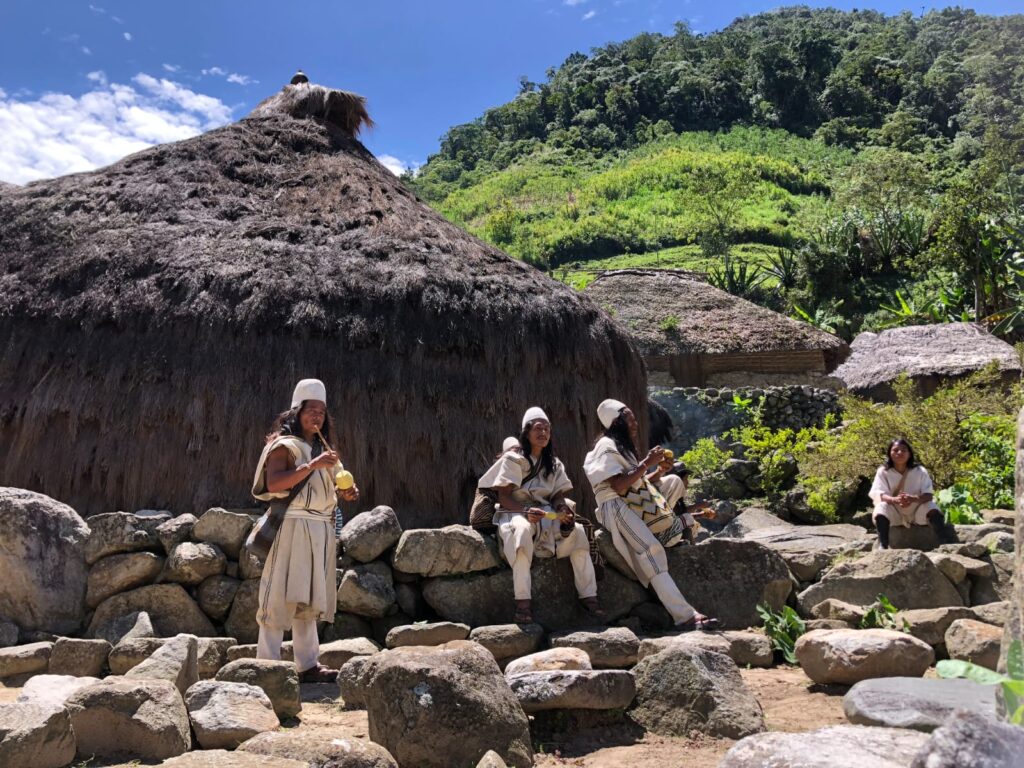
Indigenous Peoples languages not only strengthen social cohesion and the transmission of values and community practices, but they also preserve systems of knowledge essential for the safeguarding of the planet. Their preservation is crucial, not only for the cultural identity of each people but also for the balance and conservation of nature. By: Guriwun Torres* Indigenous Peoples’ languages are a reflection of the culture of their speakers, their cosmovisions, and knowledge. They contain wisdom about how, where, and when to use the resources and goods of nature, making them essential in ecological protection and conservation, as well as in the harmonious relationship between Indigenous Peoples and their environment. These languages are the main medium through which knowledge, the history of their Peoples, and their territories have been passed down from generation to generation, acting as custodians and sources of cultural heritage. They represent the very language in which the inherent relationship between the spiritual world and the material world is expressed, a vision that guides Indigenous Peoples’ understanding of nature, the universe, and everything contained within it. This knowledge has allowed for the preservation of biodiversity and ecosystems in various regions of the world. It is no coincidence that many areas with high biodiversity are also rich in cultural diversity, represented by Indigenous Peoples and linguistic diversity. A clear example of this is the Sierra Nevada de Santa Marta, ancestral territory of the Indigenous Peoples Arhuaco, Kogui, Wiwa, and Kankwamo, who speak three Indigenous Peoples’ languages: Ikun, Kogui, and Dámana. Its high level of endemism and biodiversity in flora and fauna, documented by biologists and ecologists, demonstrates how cultural practices and traditional knowledge have been fundamental in its conservation. From my experience as an Indigenous woman and as a biologist, I have found and understood that there is no more intimate and profound way to understand cosmovisions and knowledge than by exploring them through the language itself. The language guards deep layers of cultural knowledge. For example, in the Arhuaco people, when the Mamos (spiritual authorities) teach or explain an idea related to the cosmovision – whether it is about a natural phenomenon, an object, an animal, a plant, or a star – they do so in a language that is not everyday language, but one that is more precise and specialized. An example is the concept Seyn zare (seyn = related to the night, zare = past suffix), which literally translates as “when everything was darkness.” This expression refers to the beginning of time, when everything was darkness, and everything existed only in thought and spirit, when the norms that govern nature and the universe in the present began to be established. This word is often translated as “Law of Origin,” a concept fundamental to explaining the norms and laws that govern the mission and mandate of the Arhuaco People in the care of life. To understand this type of knowledge, it is not enough just to speak the language; a prior understanding and a broad mastery of the vocabulary are required to grasp and access these concepts. When it is necessary to comprehend these uncommon terms in everyday life, seeking someone with this knowledge, who can interpret and explain in a more accessible language, becomes an indispensable option. Therefore, the extent of knowledge can only be fully grasped to the degree that one’s understanding permits and as much as those with the wisdom are willing to share. When these concepts are translated without this level of depth, they are often oversimplified, losing key ideas and nuances. Protecting Indigenous Peoples’ languages is essential to preserving the richness and depth of ancestral wisdom. In the Arhuaco or Iku people, the language is called ikun, which means “to speak in the language of the Iku.” However, when it comes to transmitting knowledge and ideas, it is referred to as ga’kunamu, which literally translates to “carrier of the message/idea.” This reflects that the ideas explaining the cosmovision of all aspects surrounding the Arhuaco are contained in the ga’kunamu. Therefore, when an Arhuaco refers to their own language, they say niwi ga’kunamu, which can be translated as “our ideas,” “our thoughts,” or “our language,” depending on the context. All of these forms of knowledge are expressed and developed in everyday life, influencing collective decision-making and the defense of territory, which is the very manifestation of culture. Thus, the Arhuaco mission is to safeguard the natural balance of the planet through rituals, payments, dances, and the strict observance of the Law of Origin, which is transmitted through the language or ga’kunamu. These practices seek respect and reciprocity with Mother Earth, the universe, and all its beings, which constitute biodiversity and ecosystems. It is understood then that within the language resides the knowledge of biodiversity and the sustainable use of resources, encompassing everything from the most everyday aspects to the most complex elements of the cosmovision. This knowledge is deeply connected to the territories that Indigenous Peoples inhabit, conserve, and protect. Indigenous Peoples’languages carry the knowledge of the land inhabited by their speakers. The specificity in the naming of geographical features—rivers, lakes, lagoons—and the beings that make up the landscape—plants, animals, fungi, insects, rocks—not only reflect their uses but also their connection to the history and cosmogony of each being. This speaks to the complexity with which these cultures understand nature. For example, in the Ikun language, the puma (Puma concolor) is called gwiajina, a compound word whose literal meaning is “older brothers,” gwia = older brother, and the suffix jina = plural. Why are they called older brothers? For the Arhuaco cosmovision, these felines are the first inhabitants of the territory, considered Mamos, guardians of the kunsamu, knowledge and wisdom that are preserved in the mountains, high moors, and snowy peaks of the Sierra Nevada de Santa Marta, which are their Kunkurwas or ceremonial homes. Although most Indigenous Peoples do not have a written tradition, there are knowledge systems that have been documented in geoglyphs and paintings, whose shapes and
Videos
Videos Webinar 1: Indigenous Peoples and the recognition of their rights in CBD and the Kunming-Montreal Global Framework In this webinar, Ramiro Batzin, the co-chair of International Indigenous Forum about Biodiversity (FIIB), discussed the work the organization has been developing, highlighted the most relevant goals of the Kunming-Montreal Global Framework to Indigenous Peoples and pointed the objectives of COP 16. Edith Bastisdas, from the International Indigenous Forum on Biodiversity, reviewed relevant international instruments linked to Indigenous Peoples rights before touching on the context of the CBD, and pointing suggestions to strengthen the Indigenous Peoples participation. https://www.youtube.com/watch?v=EW8-nxbx7m0 Eunice Chepkemoi, Indigenous Woman Fellow – Land is Life Indigenous Women’s Program Meet Eunice Chepkemoi, an Ogiek woman from Kenya and an Indigenous Woman Fellow in our Indigenous Women’s Program. In this video, Eunice shares insights on her fellowship and her project on empowerment of Ogiek women on renewable energy as means of combating the climate change crisis. https://www.youtube.com/watch?v=Mm5-nitB2LM&t=2s Nerieth Isabel Becerra Jacanamejo, Indigenous Woman Fellow – Land Is Life’s Indigenous Women’s Program Following a training session in the Guna Yala territory in Panama, Nerieth Isabel Becerra Jacanamejoy, of the Inga People of Colombia, talks about her fellowship as part of Land is Life’s Indigenous Women’s Program. https://www.youtube.com/watch?v=K8rQCP7UBN4&t=4s Taguide Picanerai, Ayoreo people Taguide Picanerai, Ayoreo people, highlights that the current situation of the PIACI in the Chaco region is complex. 20 years ago, the Ayoreo people were forced to flee their territory due to deforestation and adopt a sedentary lifestyle. He reveals that the government of Paraguay does not officially recognize the existence of Indigenous Peoples in Voluntary Isolation and Initial Contact. Taguide urgently calls for the recognition and protection of his brothers’ and sisters’ rights. https://www.youtube.com/watch?v=V3Xr2lJVaHM Alicia Cahuiya, Waorani people Alicia Cahuiya, Waorani people, Leader and Coordinator of the Women Program at CONAIE. Alicia has spent years fighting against oil, mining, and logging companies encroaching on the Yasuní, home to the Waorani people and the Tagaeri and Taromenane peoples, who live in voluntary isolation. Her fight is crucial to preserving their land and way of life. In the video, Alicia highlights the challenges that put the culture and well-being of the PIACI at risk and makes an urgent call to protect and respect the lives of these #IndigenousPeoples so that they can live freely and in peace. https://www.youtube.com/watch?v=aNIQfugo1LA Julio Cusurichi Palacios, Shipibo People Julio Cusurichi Palacios, Shipibo People, member of the Board of Directors of AIDESEP, responsible for the PIACI program. Julio has been working tirelessly to protect Indigenous Peoples in Voluntary Isolation and Initial Contact (PIACI) in the Peruvian Amazon. In this video, Julio highlights the severe threats and challenges jeopardizing the survival of PIACI and calls for an end to ongoing violations and the urgent recognition of PIACI’s territorial rights https://www.youtube.com/watch?v=y7g0iT5pBVU&t=24s Dr. Mordecai Ogada, Chapter 3: Corruption, the Crisis Narrative, and the Impacts of Thirty-Thirty In this chapter, Dr. Ogada talks about the effects of corruption on big conservation, the crisis narrative that states that all African wildlife is in danger because of black Africans, and the danger of the UN’s thirty proposal for Indigenous Peoples. https://www.youtube.com/watch?v=oXS8M8NphpY Dr. Mordecai Ogada, Chapter 2: The Juggernaut of Big Conservation and International finance In Chapter 2, Dr. Ogada discusses the rise of the big conservation organizations and their relationship with international finance and European royalty https://www.youtube.com/watch?si=ENA6DyK0VfBYrVae&v=nQtKGG52zO4&feature=youtu.be Dr. Mordecai Ogada, Chapter 1: Colonialism, conservation and the power of money interview with Dr. Mordecai Ogada is a conservation writer, who has been involved in conservation policy and practice for the last 18 years in Kenya and other parts of Africa, mainly related to human-wildlife conflict mitigation, and carnivore conservation. Dr. Ogada has been examining the policy problems and prejudices that underlie the challenges experienced in wildlife conservation, particularly in the global South. These issues form the central theme of ‘The Big Conservation Lie’ a book focused on Kenya he co-authored with John Mbaria. In Chapter 1, he discusses the connections between colonialism, conservation and the power of money. https://www.youtube.com/watch?v=fkPlwIQWzds&t=31s El Consentimiento Previo, Libre e Informado es un derecho fundamental de los Pueblos Indígenas Prior consent is not a mere administrative process but a substantive right of Indigenous Peoples, says David Suárez, Land is Life’s FPIC Program Coordinator. Consultation and prior consent protect the self-determination of Indigenous Peoples, and it involves any element that may affect their cultures and ways of living. https://www.landislife.org/wp-content/uploads/2024/09/0913.mp4 International Biodiversity Day 2024 Land is Life calls on the crucial role Indigenous Peoples play in preserving biodiversity. https://www.youtube.com/watch?v=EndIhnSX6ns Daniel Santi: las deudas de la COP con los Pueblos Indígenas Since 2016, Indigenous Peoples have had a greater presence in debates on climate change within the UN Framework Convention on Climate Change. David Suárez, Land is Life’s FPIC Program Coordinator, debates on important topics in the context of COP 28 in Dubai, for Indigenous Peoples to participate in as a decision-making space. https://www.youtube.com/watch?v=C_fPPdEYkyk Alicia Cahuiya: los Pueblos Indígenas son los últimos guardianes del Yasuní Alicia Cahuiya is a Waorani woman and leader, living in the Yasuní National Park in Ecuador. She talks about the impacts of the oil industry on Yasuní, her family, her people, and her culture. She speaks about the struggle of Waorani women to save this preciousness of biodiversity, which is their home and also the home of future generations of the Waorani People. https://www.youtube.com/watch?v=hXwqk58BzAw Después de la Consulta Yasuní: entrevista a Ramiro Ávila Ramiro Ávila, former judge of the Constitutional Court of Ecuador, explains the meaning of the victory of the Yes in the Yasuni Consultation in 2023, and about what can be expected moving forward. https://www.youtube.com/watch?v=BVMxV9xuQc0 Eight main threats the PIACI of South America are facing 2021 This video explores the eight main threats to the Indigenous Peoples Voluntary Isolation and Initial Contact in South America linked to the exporter agro-extractive development model in South America. It demands that the States of Latin America and the international community take urgent measures to guarantee their life and rights. https://www.youtube.com/watch?v=p9qoRtIMCY0 Indigenous women leaders of Ecuador and Land is Life support
Our Team
OUR GOVERNANCE Land is Life is staffed by a dedicated team of Indigenous Peoples’ leaders, activists and allies based around the world and bound by a common mission to support the movement for self-determination. Governing Council Land is Life’s Governing Council, representing Indigenous Peoples’ organizations from the world’s seven socio-cultural regions, meets every three years and uses a consensus model to set the organization’s priorities and strategies. Throughout the year, the Governing Council works with Land is Life’s central coordinating office and regional coordinators to advance the organization’s objectives. Governing Council Land is Life’s Governing Council, representing Indigenous Peoples’ organizations from the world’s seven socio-cultural regions, meets every three years and uses a consensus model to set the organization’s priorities and strategies. Throughout the year, the Governing Council works with Land is Life’s central coordinating office and regional coordinators to advance the organization’s objectives. Africa Arctic Saami Human Rights Organization Gwich’in Steering Committee/elders Asia Mesoamerica Pacific South America Asociacion Protectoras de la Madre Tierra Africa Arctic Saami Human Rights Organization Gwich’in Steering Committee/elders Saami Human Rights Organization Gwich’in Steering Committee/elders Asia Mesoamerica Pacific Mesoamerica South America Asociación Protectoras de la Madre Tierra Mesoamerica Pacific South America Asociacion Protectoras de la Madre Tierra We are a global team Land is Life is staffed by a dedicated team of Indigenous Peoples’ leaders, activists and allies based around the world and bound by a common mission to support the movement for self-determination. Board of Directors Land is Life’s Board of Directors brings together Indigenous Peoples’ leaders and activists from various fields of expertise, who are deeply committed to the cause of defending and protecting Indigenous Peoples’ rights and territories throughout the world. Mariam Wallet Mohamed AboubakrineCHAIR Mariam Wallet Aboubakrine is a Tuareg woman from Timbuktu, Mali. She received a traditional Tuareg education, is a medical doctor with a degree from The Medicine School of the University of Tizi-Ouzou (Algeria), and has a Master’s in Humanitarian Action from the University of Geneva. Mariam is a former Chair of the United Nations Permanent Forum on Indigenous Issues, where she served as an expert member from 2014 – 2019. For more than 20 years, as a member of Tin Hinan, a nomadic women’s association, she has advocated for the defense, promotion, and self-determined development of Indigenous Peoples in the Sahel-Sahara region of Africa. Mariam is one of six principal investigators of the Arramat Project, Co-Chair of a UNESCO collaboration for Indigenous-led biodiversity conservation, health and well-being, and an Adjunct Professor at la Faculté de Droit Civil de l’Université d’Ottawa. Marcos Terena Marcos Terena is a son of the Xané People from the Pantanal region of Brazil. Marcos has devoted his life to working and organizing for the rights of Indigenous Peoples. In 1977, Marcos co-founded the first Indigenous political movement in Brazil, the Union of Indigenous Nations. In 1992 he organized a landmark event in the worldwide struggle for Indigenous Peoples’ rights, the World Conference of Indigenous Peoples on Territories, Environment and Development. At this historic gathering, Marcos was chosen by over 700 Indigenous leaders from around the world to deliver their message to world leaders at the United Nations Earth Summit (UNCED). Marcos is President of the Inter-Tribal Committee and, with his brother Carlos, founded the World Indigenous Games. He is also a founding member of the International Alliance of Indigenous-Tribal Peoples of the Tropical Forests, The Brazilian Institute for Intellectual Property, and the Call of the Earth Circle. Anne Nuorgam Anne Nuorgam is a Saami leader who holds a Master of Laws degree and is currently a PhD student at the University of Lapland. She has been a member of the Saami Parliament of Finland since 2000. Ms. Nuorgam is a former Chair of the United Nations Permanent Forum on Indigenous Issues, where she served as an expert member from 2017 – 2022. She is the Chair of Veahčanjárga Fishery, and is Head of the Saami Council’s Human Rights Unit. Cecilia Baltazar Cecilia Baltazar is a Kichwa leader from the community of Chibuleo San Francisco in Ecuador. She is an expert in intercultural Indigenous Peoples’ justice and the rights of nature and has been a long-time advocate for the collective rights of Indigenous Peoples. She holds a Master’s degree in Constitutional Law from the Universidad San Francisco de Quito. She served as an Advisor to the Constitutional Court of Ecuador, and in 2023 was elected to Ecuador’s National Assembly, representing the Province of Tungurahua. Brian Keane Brian Keane has been working with Indigenous Peoples’ communities for nearly forty years. He is co-founder of Land is Life, served as Rapporteur for the United Nations Permanent Forum on Indigenous Issues (2017-2019), and was appointed – during the Obama Administration – as the first Advisor for Indigenous Peoples’ Issues for United States Foreign Assistance. Binota Moy Dhamai Dr. Binota Moy Dhamai is an Indigenous rights advocate and researcher from the Jumma-Tripura people. He is a former Chair of the UN Expert Mechanism on the Rights of Indigenous Peoples (EMRIP) and the UN Voluntary Fund for Indigenous Peoples. As a founder, leader, and committed advocate, he has been actively involved in human rights and Indigenous Peoples’ rights initiatives across national, regional (Asia), and international platforms. His current work, as a Research Fellow at the Australian National University, bridges academic research and policy engagement and advocacy to promote justice, recognition, self-determination, and human rights for Indigenous Peoples across Asia and globally. Staff Ana AmaguañaIndigenous Women’s program Coordinator I am Ana Amaguaña, an indigenous woman from the Kichwa-Otavalo people of Ecuador. I speak my native language, Kichwa, Spanish, Italian and English. From 2022 to February 2024, I accompanied the work of Land is Life in the coordination of the secretary of the International Working Group of Indigenous Peoples in Voluntary Isolation and Initial Contact – GTI-PIACI. Currently, I am assuming functions as coordinator in the PIACI program. I have aspirations to contribute to the formulation of effective actions in favor of
AN IMPORTANT VICTORY FOR THE MAASAI: High Court of Tanzania rules Pololeti Game Reserve illegal
October 02 2023 In 2022, the Tanzanian Minister of Natural Resources and Tourism announced the demarcation of 1,500 hectares of Maasai land for the Pololeti Game Management Reserve. The announcement led to major protests in the Loliondo/Ngorongoro area of northern Tanzania, and on June 10th 2022, the Tanzanian police used force to evict the Maasai from their land. The result was dozens of people injured and thousands seeking shelter in the nearby forest. Arbitrary arrests of community leaders were also reported, including Village Councillors and Chairpeople, in clear violation of the Maasai’s human and collective rights. The protests arose due to the government’s plans to lease the legally registered village lands to the Otterlo Business Corporation, (a Dubai company linked to that country’s royal family), for tourism and hunting. One year later, however, after a judicial review that challenged the Minister’s decision as based on illegalities, the absence of consultation, and carried out with violence, the country’s High Court decided in favor of the plaintiffs, ruling the Game Management Reserve illegal. The Court stated that in view of the lack of consultation, the entire process for the establishment of the Pololeti area was null and void. On the other hand, the court stopped short of assigning blame for the ensuing violence. Whether this is the end of the affair, is another matter: harassment of the pastoralist Maasai, whose grazing land is essential to their survival, is ongoing. In 1992, the Tanzanian government authorized the OBC to take over four hundred thousand hectares of land for game hunting and a private airport, land that was home to over fifty thousand Maasai. In 2009, the government forcibly displaced over three thousand Maasai at gunpoint. From 2015 to 2017, Serengeti Rangers set fire to over two-hundred eighty homes), leaving over twenty thousand Maasai homeless. The High Court’s decision represents a highly positive act for the Maasai People , and will hopefully be accepted by the Tanzanian authorities without reprisals. The sustained pressure exerted by international and Civil Society organizations has no doubt had an effect, and will need to be continued if the Maasai are to stand a chance of surviving the assault on their communities and their lands. Fotos: Land is Life Land is Life applauds the High Court’s decision, and calls on the Tanzanian government of Samia Suluhu Hassan to accept the ruling, and to respect the rights and needs of the pastoralist Maasai People. Indigenous Peoples are the best protectors of the land on which they depend, and although tourism may be an important contributor to Tanzania’s economy, it cannot be promoted at the cost of the lives and welfare of Indigenous People who are also the country’s own citizens.