BATWA PEOPLE UNDER ATTACK AGAIN: for attempting to return to traditional lands in eastern Congo (DRC)
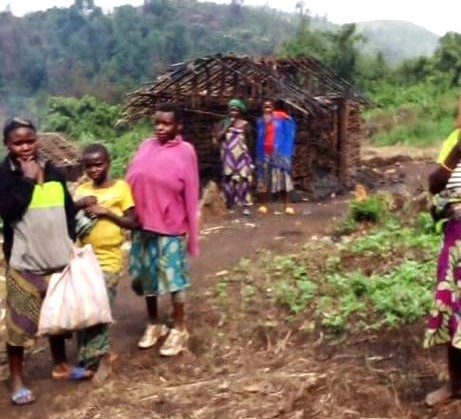
Displaced from their lands in the eastern area of the Democratic Republic of Congo (DRC) in the 20th Century, with neither consultation nor compensation, the Batwa People (formerly known as Pygmies) are struggling to return to their forest home in the Kahuzi-Biega National Park (PNKB). But the Park Authorities are attacking them once again. In January 2024, Park Authority guards, accompanied by Congolese Military, have once again raided a number of Batwa Communities, displacing people and burning their homes. The ongoing violence has led the African Commission on Human and Peoples Rights to direct a letter to the country’s government, under recently reelected President Félix Tshisekedi, calling for an end to the violence and the eviction of Indigenous Peoples from the Park. Park authorities have accused the Batwa of being members of the M23, a Tutsi insurgent group fighting the government of the DRC, mainly in the country’s northern Kivu Province. The Batwa firmly reject the accusation, and have declared their intention to continue the fight to return to their lands by all non-violent means possible. Land is Life fully endorses the stance of the African Commission and echoes its call for an end to violence against the Batwa, who have been brutally displaced from their ancestral territories in another example of what has been called ‘Fortress Conservation’. The Batwa are the original occupants of what is now the Kahuzi-Biega National Park, and as such, their right to live in peace in their original territories must be respected. Conservation can never be a motive for violating the human rights of Indigenous Peoples. SIGN UP BELOW TO RECEIVE OUR WEEKLY ALERTS
FROM WORD TO ACTION: the right of Indigenous Peoples to Free, Prior, and Informed Consent
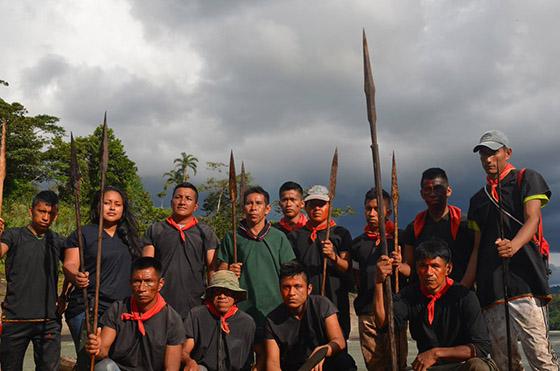
Marcela Ojeda January 15 2024 At the end of October 2023, a delegation of the A’i Cofán Indigenous People from the province of Sucumbíos, Ecuador, demonstrated in front of the country’s Constitutional Court, in Quito, the country’s capital. At almost the same time, members of the Ogiek People were protesting during the official visit to Kenya of King Charles III of England. In both cases the Indigenous Peoples involved sought to draw attention to a phenomenon being repeated around the world: the suppression of the right of Indigenous Peoples to Consultation and Free, Prior and Informed Consent (FPIC), regarding the implementation of any project that may affect their territories and ways of life. However, declares David Suárez, coordinator of the FPIC Program of Land is Life, “what we have at the moment is a profound contradiction between legal advances, and a political debt in their effective implementation. This is why indigenous peoples often have such sharp differences of opinion with national governments.” Impulses for self-determination These are not isolated incidents, but part of a necessary and ongoing process that has amplified the voice of Indigenous Peoples everywhere. The change has been advancing slowly but inexorably since June 1989, when the International Labor Organization (ILO) published its Convention No. 169 on Indigenous and Tribal Peoples. This instrument –correcting and deepening the ILO own 1957 recommendations – consolidated the push for the recognition of self-determination for indigenous communities, although without specifically mentioning the concept. “By referring to autonomy, making one’s own decisions, and choosing one’s own development priorities, ILO 169 establishes the idea of self-determination, which is the umbrella under which all the other human rights of Indigenous Peoples are organized and have meaning,” says Suárez, who warns that a common mistake is to consider that the exercise of this guarantee is limited to large extractive and energy projects. “Consultation also has to do with the definition of education or intercultural health policies, based on prioritizing the needs of these populations.” Over time, other multilateral organizations designed legal tools that coincided with the Convention 169 principles. The most relevant were the declarations of the United Nations declaration on the Rights of Indigenous Peoples (UN, 2007), and that of the Organization of American States (OEA, 2016). Both determine that states “will hold consultations and cooperate in good faith” with the “representative institutions” of the communities that request it, before any potentially harmful actions are implemented. In line with these examples, the governments of several countries – especially in Latin America – sought to incorporate this right into their legal codes. For example, at the constitutional level, FPIC processes were recognized in the Constitutions of Ecuador (1998 and 2008) and Bolivia (2009), while the authorities in Peru (2011) and Panama (2016) approved specific laws. This does not mean, however, that the situation has been resolved, far from it. “In Bolivia, for example, Prior Consultation is not binding. And as Bolivian journalist Etzhel Llanque has pointed out, “this is a major weakness, because even though a community says ‘no’, its position has no legal validity”. There are numerous similar examples in Latin America, which, while being a “vanguard” region with regard to FPIC policies, also has the highest rates of conflict in relation to them. Litigate and construct in order to move forward Just over 65% of the States that ratified ILO Convention 169 – 15 out of 23 – are Latin American. This part of the world also has a significant proportion of Indigenous populations (just over 8% of total inhabitants): peoples whose ancestral territories cover 45% of the intact forests of the Amazon basin, where deforestation is notably less prevalent. These indicators are evident even in Brazil, whose public policies on conservation and Indigenous Peoples are rarely characterized by their understanding and appreciation of the cultural aspect. Despite their evident importance, according to the United Nations Educational, Scientific and Cultural Organization (UNESCO), only “in the minority of cases, do Indigenous Peoples and organizations participate in the governance, decision-making, and management” of these areas. And guaranteeing Indigenous Peoples the exercise of their legitimate right to decide, is something that “no country has done (…) according to the minimum standards established by the United Nations Declaration on the Rights of Indigenous Peoples,” SIRGE (the Securing Indigenous Peoples’ Rights in the Green Economy Coalition), in its Guide to FPIC. The consequence of non-compliance is that Indigenous groups are obliged to resort to judicial processes and confrontational shows of strength in order to access the denied or disputed guarantees. In the former case we have emblematic litigations such as Saramaka vs. Suriname, where the ruling of the Inter-American Court of Human Rights (IACHR) spoke for the first time of consent, albeit in a very limited sense, with regard to projects that may irreversibly affect the way of life of an Indigenous People. Another example is the ruling of the same court in the case of Awas Tingni vs. Nicaragua, regarding the responsibility of the state in the correct delimitation of Indigenous territories. At the same time, the elaboration of their own FPIC protocols has allowed many Latin American indigenous communities to express their priorities more clearly. Recently, this alternative – which includes examples from Argentina to Central America, passing through Bolivia, Brazil, Ecuador and Colombia – has become a regional and even global trend. For example, the above mentioned Ogiek People of Kenya, are working on this type of protocol with the support of the Sarayaku People of Ecuador. While there may be progress in Latin America, it is essential to understand that the reality in Asia and Africa is much more challenging for Indigenous Peoples, even when judicial rulings and multilateral organizations support their territorial claims. In the case of Asia, although “two thirds” of the world’s Indigenous Peoples live on that continent, the United Nations Permanent Forum on Indigenous Issues has warned that many “are affected by the lack of recognition of their cultural identity, its exclusion and its marginalization”. Regarding the
UGANDA MUST RESPECT RIGHTS OF THE BENET MOSOP
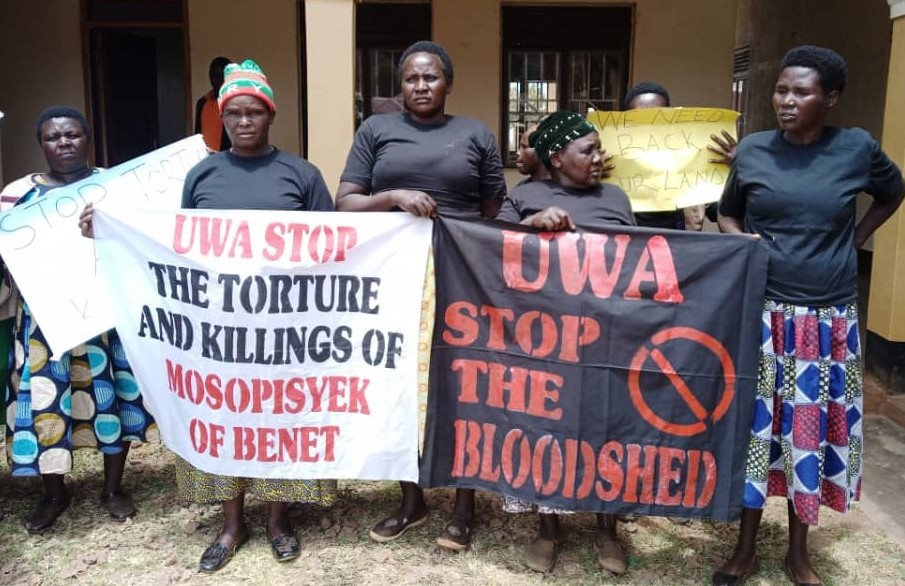
GOVERNMENT HAS TO END VIOLENT ACTIONS OF THE UGANDA WILDLIFE AUTHORITY On October 27th, 2005, the Ugandan High Court directed the national government to set aside parts of the Mt. Elgon National Park for the benefit of the Mosop of Benet Mosopisyek, recognizing that community as Indigenous inhabitants of Mount Elgon, and giving them the right to remain in temporary settlements and reclaim their schools and services. However, eighteen years later, the Government of Uganda has still not enforced the judgment, and in July 2019 passed new regulations (without consulting the affected Indigenous Peoples), that increased penalties for livestock found grazing on what is their own ancestral lands. In September 2022 the community took legal action against the Uganda Wildlife Authority (UWA) for past human rights abuses, and organized peaceful assemblies to reclaim their land, and since that date the Benet Mosop have been attacked by UWA agents with greater frequency and brutality. The community relates that the UWA often uses lethal force: shooting or beating community members found within the boundaries of the park or on its outskirts. UWA has also destroyed homes and farms and impounded animals, depriving the people of the community their livelihood. According to the Benet Mosop, since October 2022, 96 houses have been razed, 70 community members arrested, and 1,295 animals impounded. Among the most grievous violations, on December 28th 2022, a 16 yearold girl was raped by a UWA agent, and on February 10th 2023, a 45 yearold man was killed by Park Rangers when they found him collecting firewood in the Mt. Elgon forest. The Mount Elgon National Park area was home to the Mosopisyek of Benet Indigenous People well before it was declared a forest reserve in 1920 by the British colonial administration. The British left in 1962, and in 1968 the newly independent Ugandan government declared the area a central reserve, and in 1993 named it Mt. Elgon National Park, all without prior and informed consent of the Mosopisyek of Benet. Since the designation of the Mt. Elgon region as a conservation area in 1920, the Ugandan government has assumed primary responsibility for environmental protection, and it is this obligation that is being utilized by the UWA to justify displacing thousands, and preventing the Mosopisyek of Benet from accessing their ancestral lands, and the sacred sites that are an essential element of their cultural history. Amongst the problems the Benet Mosop face, is that while Article 10 of the 1995 Ugandan Constitution provides citizenship by birth for Indigenous Peoples living within the Uganda boundaries in 1926, the list of Peoples registered does not include all Uganda’s Indigenous communities. The Mosopisyek, for example, were not included, and as a result do not enjoy their full political and socio-economic rights such as access to public services. Land is Lifecalls on the government of Uganda to end the evictions of the Mosopisyek of Benet Indigenous Peoples from their ancestral lands at Mt. Elgon National Park, and to investigate the arbitrary arrests, killings, torture and ill-treatment allegedly committed by State agents, including members of the Uganda Wildlife Authority. Land is Life also calls for the Mosopisyek of Benet, together with other excluded peoples, to be included in the category of Indigenous Peoples, and the restitution of their ancestral lands which were declared a national park without their prior and informed consent. Fotos: 1. monitor.co.ug 2. newvision.co.ug Share Tweet Forward LAND IS LIFE Our mailing address is: 228 Park Ave South, PMB 45112 New York, NY 10003 – 1502 US www.landislife.orgWant to change how you receive these emails? You can update your preferences or unsubscribe from this list.
INDIGENOUS WOMEN PARTICULARLY AT RISK IN BRUTAL INTER-ETHNIC CONFLICT IN MANIPUR.
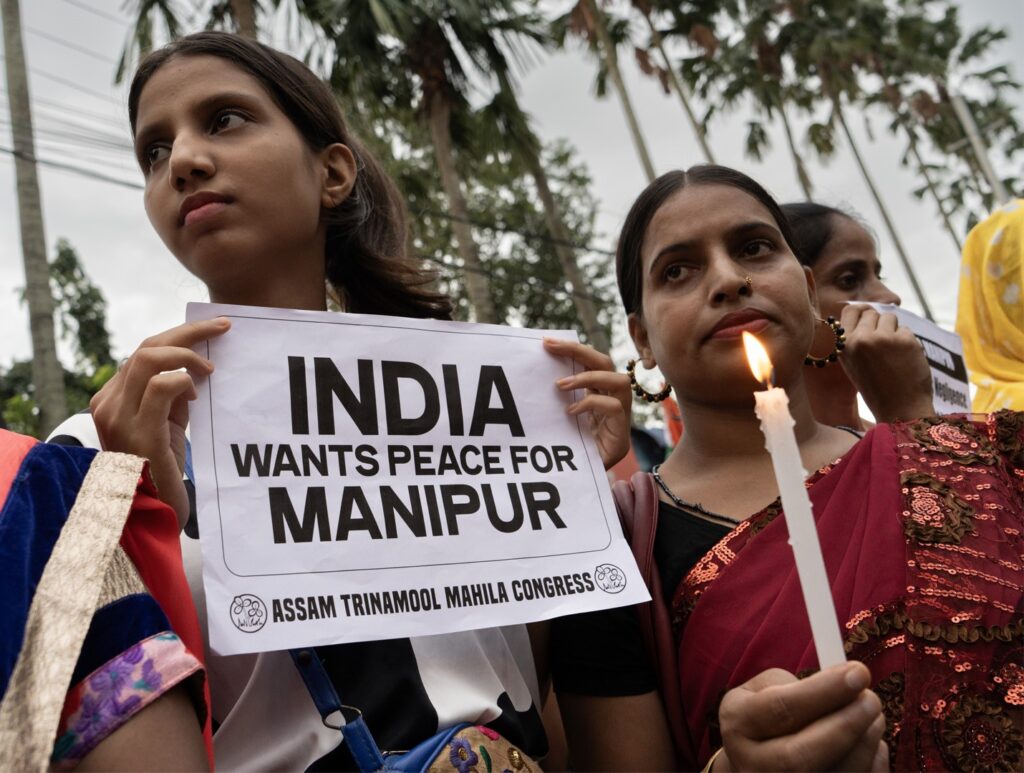
INDIAN GOVERNMENT MUST SPONSOR PEACE TALKS, PROSECUTE THOSE RESPONSIBLE FOR VIOLENCE, AND REHABILITATE AND RESETTLE THOSE AFFECTED BY THE VIOLENCE The violent conflict that broke out earlier this year between the Meitei and Kuki communities in Manipur, India, has resulted in the brutal deaths of at least 150 people (many believe the figure to be higher) and the displacement of tens of thousands. And despite the presence of the armed forces, who have also been accused of violence, inaction and partisan roles, the confrontations and violence continue. According to many observers, the lack of attention paid to the area, and the inaction on the part of the Central Government of Narendra Modi, is one of the root causes of the bloody clash between the armed groups belonging to the two peoples. Also critical is the lack of Free, Prior, and Informed Consent of the Indigenous Peoples whose cultures and lands are being affected by forest conservation measures, energy and extractive projects, etc. The Center for Research and Advocacy, Manipur, CRA, is calling on the government to “institute [a]prompt and impartial investigation into all recorded cases of violence against women, farmers, youths, students, and media personnel, and to prosecute all those involved in perpetuating the violence against indigenous women in Manipur, including its security forces, who have a duty bearer role to protect women, youths and all Indigenous Peoples in Manipur”. The CRA also urges the Government of India and Government of Manipur to “take urgent steps to protect Indigenous Peoples, especially Indigenous women, from all forms of violence and discrimination in accordance with the UN Convention on Elimination of All Forms of Discrimination and Violence against Women, and the UN Declaration on the Rights of Indigenous peoples.” The Manipur based CRA, also calls attention to the increasing number of “cases of violence against women and youth perpetrated by the communities in conflict (and by the Indian security forces), despite the extensive militarisation of Manipur, and additional deployment of Indian security forces to Manipur in order to control the violence in the aftermath of the ethnic conflict that began on 3 May 2023.” The increase in violence against women is extremely serious, but is hardly new, as documented by this recent article in the Indian news portal Outlook: Manipur: How Violence Against Women Has Become A Weapon During Conflict. Land is Life is therefore calling for an end to violence in Manipur, and the resolution of the conflict through a negotiated settlement under the auspices of the Indian National Government. Land is LIfe echoes the call of the CRA for the investigation and prosecution of all those involved in crimes against Indigenous women, the excessive use of force on young people, and for the repeal of the Armed Forces Special Powers Act, 1958. Land is Life also calls for the protection of Indigenous lands from damaging energy and extractive industries, and emphasizes the need for Free, Prior and Informed Consent of any Indigenous Peoples affected. MANIPUR Manipur is a State in the north east of India, with a long independent history dating back to AD 33. Except for the years of the British colonization from 1891 to 1947, the Kingdom of Manipur has generally been self-governed, and only became part of India as a consequence of the partition of the sub-continent when the British finally withdrew. More than 40 percent of Manipur’s people presently live below India’s poverty line. Violence broke out in May of this year between the State’s two major ethnic groups, the predominantly Hindu Meiteis, the traditional population of the area, who live in the valley (10% of the land area), and once formed over 50% of the population, but according to the 2011 Census of India, now only form 43% and the mainly Christian Kukis, brought in by the British to protect Manipur from the raids by the northern Naga tribes, who are still in active rebellion against India. Officially, the Kuki population, just 1% in 1891, had risen to 16% by 2011. Although the number is uncertain due to various factors including increased migration, there is little doubt that the Kukis, who together with Naga groups, live mainly in the hills that form the major part of the State’s land area, now form a considerable proportion of the population. The original dispute arose over a number of issues: the Meitie demand for restoration of Tribal Status and the violent response from opposing groups; the cross border impact of the ongoing conflict in Myanmar; and the Indian government’s pursuance of extractive industries and infrastructure projects, such as oil exploration, Kaladan Multimodal Transit Project, the trilateral highway project, etc. and the Sittwe to Gaya gas pipeline. Meitei people’s cultural concerns, and unchecked Kuki migration from Myanmar, where they are being persecuted by that country’s military rulers, are also factors. And besides the Kukis, the Meiteis are also concerned about the unabated migration of non Indigenous Peoples from other parts of India, Nepal, Bangladesh, and Myanmar. The Kuki have also revived the possibility of being granted a separate state administration and the unification of Kuki Zo territory, called the Zalengam, an idea that has been rejected by both the Meitei and Naga communities. Religion is also part of the mix, as between the 1961 and 2011 censuses of India, the share of Hindus in the State declined from 62% to 41%, while the share of Christians rose from 19% to 41%. The situation is extremely complex, with a risk the conflict could spread to Kuki and Meitei communities in neighboring Indian states, to Myanmar, and to Bangladesh. The violence, on the other hand, is quite clear. At the time of writing, it is estimated that some 70,000 people have been displaced, hundreds killed and injured on both sides, and entire villages burned to the ground. Both groups have also formed armed militias that are still not under control. And while the Indian central armed forces have been brought in, the state police activated, and
LOS PUEBLOS INDÍGENAS, AGENTES EN LA LUCHA CONTRA LA CRISIS CLIMÁTICA
Jorge Basilago 26 septiembre 2023 https://www.opendemocracy.net/es/pueblos-indigenas-agentes-lucha-crisis-climatica/ La crisis climática es una realidad que ya nadie puede desconocer. Tampoco existe duda alguna acerca de la seriedad del fenómeno para la vida de los Pueblos Indígenas, explica José Proaño, Director de Programas de Land is Life para América Latina. “Todos seremos afectados de manera dramática y aquí, en América Latina, encontrarnos en la región del planeta que genera menos emisiones de CO2, tampoco impide que las consecuencias del cambio climático sean cada vez más visibles y dramáticas. Más grave aún, es que la crisis impactará con mayor severidad a los pueblos indígenas, con especial énfasis en las mujeres de esas comunidades.” La respuesta, según Proaño, radica en tomar decisiones difíciles, como cuando la población ecuatoriana optó por dejar el petróleo bajo tierra, en la Consulta Popular sobre la explotación hidrocarburífera en el Parque Nacional Yasuní. Es indudable que el mundo tiene que superar la era de los combustibles fósiles, y para los Pueblos Indígenas de todo el mundo, incluyendo los Pueblos en Aislamiento Voluntario, mientras más rápido suceda eso, será mejor. Su supervivencia puede depender de ello. La crisis climática: impacto global, daños particulares A comienzos de septiembre de 2023, la Organización Meteorológica Mundial (OMM) presentó un informe sobre las temperaturas récord del verano boreal precedente. Según este organismo, el trimestre junio-julio-agosto fue el más caluroso en la historia del planeta tierra: en conjunto, este período resultó 1.5°C más cálido que el promedio preindustrial de 1850-1900. Este dato llevó al Secretario General de la ONU, António Guterres, a concluir que “el colapso climático” mundial ha comenzado. “Los científicos han advertido hace mucho tiempo sobre lo que desencadenará nuestra adicción a los combustibles fósiles.” Al ritmo en que aumentan los desastres de origen meteorológico – las inundaciones por esta causa se incrementaron un 134% entre 2000 y 2023 –, también se hacen más evidentes sus consecuencias negativas para poblaciones rurales e indígenas en regiones como el continente asiático, los pequeños estados insulares y el África subsahariana. Los países con menor responsabilidad en la aceleración del cambio climático padecen sus consecuencias con mayor crudeza De hecho, la Cumbre Climática de África, reunida en Kenia en septiembre de 2023, determinó en su Declaración Final que ese continente “se está calentando más rápido que el resto del mundo”. Las autoridades gubernamentales participantes del encuentro, manifestaron asimismo su preocupación porque “muchos países africanos enfrentan cargas desproporcionadas y riesgos crecientes relacionados con el cambio climático”. Por lo general, los países con menor responsabilidad en la aceleración de este proceso padecen sus consecuencias con mayor crudeza, pero a la vez albergan gran parte de los activos naturales y culturales que podrían contribuir a atenuarlas. Características que desvelan, simultáneamente, otras inequidades históricas: las naciones africanas, por ejemplo, concentran en conjunto cerca del 40% de los recursos de energías renovables del mundo, pero solo recibieron el 2% de la inversión total en ese ámbito, durante la última década. Algo similar sucede con los pueblos indígenas, a los que un estudio de la Organización Internacional del Trabajo (OIT) consideró “fundamentales para el éxito de las medidas y las políticas dirigidas a mitigar el cambio climático”. En principio, porque son alrededor de 370 millones de personas en todo el planeta, situadas “a la vanguardia de un modelo económico moderno basado en los principios de una economía verde sostenible”, las que pueden impulsar un cambio de matriz productiva a partir de sus conocimientos tradicionales. Sin embargo, la OIT indicó también que estas poblaciones concentran otras seis características que las vuelven especialmente frágiles ante un eventual colapso del clima. La primera y más dañina de ellas es la pobreza, que acosa a un 15% de sus integrantes; al igual que la dependencia de los recursos naturales; la vulnerabilidad de las regiones geográficas y ecosistemas en que viven; la potencial obligación de migrar por la destrucción de esos hábitats; las desigualdades de género y la falta de reconocimiento como personas indígenas, de sus derechos e instituciones. Pueblos Indígenas africanos como los Maasai de Tanzania, por ejemplo, ya han sido desplazados de sus territorios y confinados al borde del hambre a partir de políticas que restringen sus actividades de pastoreo en “áreas de conservación”. Advertidos de esta circunstancia, los gobernantes reunidos en la cumbre africana instaron a “apoyar a los pequeños agricultores, Pueblos Indígenas y comunidades locales en la transición a economías sustentables dado su papel clave en la gestión de los ecosistemas”. Pero aun así, múltiples culturas ancestrales, en todo el mundo, pueden afrontar idéntico destino a corto o mediano plazo. Los Maasai de Tanzania han sido desplazados de sus territorios y confinados al borde del hambre. Foto: Land is Life América Latina Los Pueblos Indígenas de América Latina tampoco escapan de los impactos de la marginación y el cambio climático. “Mientras en el mundo se discuten las formas de parar el cambio climático, las empresas transnacionales no han hecho ningún esfuerzo por bajar las presiones sobre nuestros territorios”, sostuvo Leonidas Iza, presidente de la Confederación de Nacionalidades Indígenas del Ecuador (Conaie) en la Cumbre Climática COP27 de Egipto, a fines de 2022. Por su parte, para Germán Freire, autor de la investigación “Latinoamérica Indígena en el Siglo XXI”, publicada por el Banco Mundial (BM), no siempre el porvenir es sinónimo de aprendizaje: “Cuando escribimos el informe en 2015, nos impactó que, a pesar de los avances de las décadas pasadas en términos de marcos legales y representación, los pueblos indígenas seguían rezagados detrás de todos los demás en casi todos los aspectos. Desde entonces, las cosas han empeorado aún más, debido a los efectos acumulativos de la pandemia, el cambio climático y el crecimiento de la desigualdad. Los pueblos indígenas necesitan estar al volante de su propio desarrollo para que este sea sostenible y resiliente”. Sobre un estimado de 42 millones de personas indígenas en América Latina, un 43% es pobre, mientras que el 24% sufre pobreza extrema En sintonía con otros análisis globales, el documento del BM puso el foco en la notoria
ECUADOR’S YASUNÍ REFERENDUM: between business as usual and the urgent need for a post oil strategy
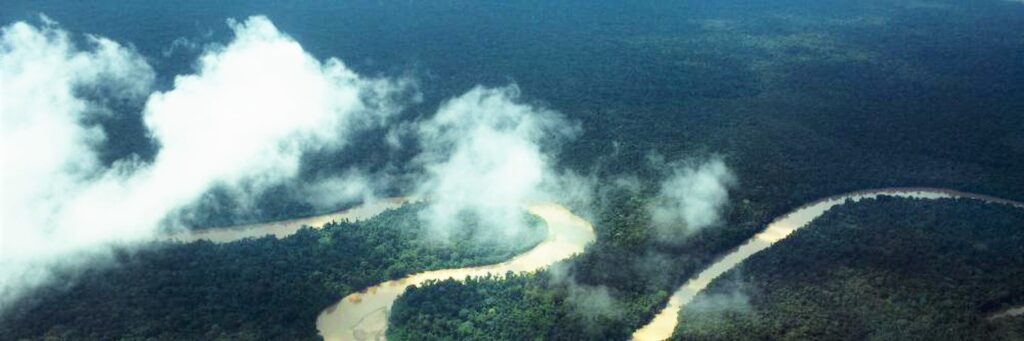
Fifty one years have now transpired since the day, June 26, 1972, that Ecuadorian television viewers saw “the first oil barrel being filled with the country’s recently discovered ‘black gold’. It was the beginning of a so-called oil ‘boom’, which in 2023, now appears to be coming to an end. The old wells are no longer as productive as they were; and new reserves are not only increasingly difficult to find, they will almost certainly be located in areas close to Amazon protected areas, where the social and environmental costs of exploiting them will be so much greater. Surprisingly perhaps, the problem is not simply one of supply. According to the forecasts of the International Energy Agency (IEA), in a few years we will reach the global demand high point, or so-called ‘Peak Oil‘, undoubtedly due to the changes brought about in Europe due to the war in Ukraine. From there demand is expected to keep falling. It now appears that for Ecuador the eagerly awaited energy transition, necessary due to the pressing need to reduce carbon dioxide (CO2) emissions, and avoid an increase in the planet’s temperature, is now knocking on the door. A climate change that, it is worth mentioning, would put many people at risk, principally the most impoverished and marginalized sectors. The dilemma for the country is how to manage this energy and economic transition internally, and with no contingency plan in sight. The situation is delicate, however, because the other side of the coin is a country where the formal employment rate barely reaches 3 out of 10 people of working age; and where, according to the World Bank, in 2022 GDP per capita reached only US$5,590, and where oil revenues form a substantial percentage of the national income. It is obvious, therefore, that stopping all oil production is not an immediate option, while at the same time it is essential to design and implement a post-oil policy in the medium term. The million dollar question, is whether political will to do so exists. The Consultation on the Yasuní Park and oil. The answer to the question is, no, at least for now. But with a popular consultation called for August 20th, 2023, the country is now facing the possibility of a turning point in its history of oil dependence. The current question posed is the same as the one raised in a frustrated 2013 plebiscite: whether the oil from oil Block 43, located to the northeast of the Yasuní National Park, one of the areas of greatest biodiversity on the planet, should be kept in the ground. A Yasuní, it is worth mentioning, that has been classified as a “Pleistocene refuge”, declared by Unesco as a World Biosphere Reserve, and is also home to peoples in voluntary isolation: the Tagaere, Taromenane and Dugakaere. The consultation is – and always was – conceived as a turning point in the search for a post-oil future for Ecuador. It will also take place almost 10 years after the previous attempt to prevent exploitation of the same Block 43, an initiative that was clearly, and illegitimately undercut by the Constitutional Court of the time. Only a sustained campaign in the face of a highly politicized national institutional structure, and confrontations with a succession of governments, was able to persuade the current Constitutional Court to issue a favorable opinion for the second version of the referendum on May 9th of this year. But while the question is identical, the political and economic conditions in which the consultation will take place are very different from those in play 10 years ago. The Block’s oil wells have been in operation since 2016, coming within meters of the buffer area of the Park’s Intangible Zone, where the previously mentioned isolated peoples live. Putting an end to oil extraction in Block 43 will consequently not only costs in terms of lost income, but also in terms of the removal of the infrastructure; which is one of the hottest points of the debate. But these costs are fixed, and no matter who wins the vote, will have to be paid, now or whenever the oil wells run dry. In Yasuní National Park, the options that the country has are seen more clearly. On the one hand, is the already traditional policy of living off oil, which does offer the possibility of sustaining social security programs for the bulk of the population, which as the poverty rate testifies has not guaranteed them, and implies an active participation in the global climate crisis. On the other hand, there is the need for a post-oil policy focused on healthier ways of living, on the need to preserve biodiversity, to reduce the impacts of climate change – which, it should be noted, will affect the most unprotected segments of the population – and protect nomadic Indigenous Peoples who live in voluntary isolation. Can the extermination of ‘peoples in isolation’ be avoided? The aforementioned Intangible Zone, located meters from block 43, is an area of Yasuní National Park reserved for protecting and guaranteeing the conditions vital for the survival of Indigenous Peoples in Isolation and Initial Contact (PIACI). A development model based on the extraction of natural resources, which includes the infrastructure required to obtain the county’s ‘black gold’, clearly endangers Indigenous Peoples and those in voluntary isolation. The forest was their home long before the arrival of the colonizers and their extractive projects. With more ecological awareness than in current times, on July 26, 1979 – and that with a military triumvirate in power –, the Yasuní National Park territory was established, which according to the Ministry of the Environment’s website implies “protecting this ecological zone of one or more ecosystems for present and future generations; excluding exploitation or occupation not linked to the protection of the area; and providing the basis for visitors to make spiritual, scientific use (of the area)”. However, and always with the unfulfilled justification that “the area’s oil reserves will help us
Declaration of the International Working Group GTI-PIACI Emphasizes the Urgent Need to Protect Peoples Living in Voluntary Isolation
From December 5-9, representatives from Indigenous Peoples’ and civil society organizations from across South America gathered in Asunción, Paraguay, for the annual meeting of the International Working Group on Indigenous Peoples Living in Voluntary Isolation and Initial Contact (GTI-PIACI). They gathered to analyze the current situation of the PIACI in the Amazon and the Gran Chaco, and develop joint strategies to defend their collective rights and address threats to their territories and lives. GTI-PIACI is an international working group made up of Indigenous Peoples’ representative organizations, non-governmental organizations, and academics, who are committed to the protection, defense, and promotion of the rights of Peoples Living in Voluntary Isolation and Initial Contact (PIACI) in the Amazon and the Gran Chaco. Land is Life, as the Secretariat of the working group, brought together over 60 representatives from 25 organizations across South America. There are an estimated 185 distinct Indigenous Peoples Living in Voluntary Isolation in South America. Each of these peoples are exposed to extremely high vulnerability due to (illegal) mining, timber concessions, oil extraction, drug trafficking, industrial agriculture, overfishing, infrastructure construction, and climate change. States have continuously failed in protecting Peoples Living in Voluntary Isolation from these threats. Land is Life and GTI-PIACI have taken a leading role in the protection of these peoples, in which their right to self-determination and to the principle of “no contact” is at the core. For them, “no contact” means freedom, and this freedom is lost if contact emerges. During the 4-day meeting, all members of the GTI PIACI working group shared the steps that they have taken towards the defense of human rights of the PIACI in their regions. Strategies for the protection of the PIACI were shared among the participants, alongside discussions on research methodologies for defining their territories. Much attention was paid to the alarming situation of the PIACI in Paraguay. The Ayoreo, who inhabit their cross-border territory in Paraguay and Bolivia, practice nomadic hunting and gathering across large distances. The fragmentation of their territory, due to industrial land use and extreme droughts, have posed an enormous threat to their culture and way of life. State borders have no meaning for the PIACI, and often their territories overlap these borders. Thus, international joint strategies for the protection of these peoples are needed. NGOs in Bolivia and Paraguay are already collaborating in collecting and analyzing data to protect the Ayoreo. “Everyone has the right to choose their way of life, and that choice needs to be respected…, we are asking the states to withdraw extractive pressures that are causing destruction in the territories of our sisters and brothers, so that they can exercise their right to live in voluntary isolation.” – Zenaida Yasacama, Kichwa woman, CONAIE “A major risk that we are witnessing is that most states are building roads that cross the territories of the PIACI, prioritizing the desires of oil and mining companies over protecting the Earth. The PIACI have their homes in those areas. These peoples have the right to live a dignified life. They need to be able to gather fruits, and to fish and hunt.” – Alicia Cahuyia, Waorani woman, CONAIE As a result of the Annual Meeting, the GTI-PIACI Working Group developed a joint declaration for the protection of PIACI. The following declaration captures the regional reflections and conclusions from organizations that took part in the gathering. (Read the Spanish version here.) 1. Comprehensively observing and respecting Indigenous Peoples’ right to self-determination, we ratify the principle of “no contact” as the principal guideline and a fundamental right of Peoples Living in Voluntary Isolation, embodied in the international standards of Indigenous Peoples’ rights. We reject all actions and initiatives that promote forced contact with these peoples. 2. We reaffirm the urgency for the recognition, demarcation and protection of the territories of the PIACI as a fundamental pillar for the exercise of the rights of these peoples. 3. We are alarmed by the regressions and lack of implementation of policies for the protection of the rights of the PIACI in the region, especially regarding the right to life, right to physical integrity, to territory, and to culture. 4. We denounce the situation of the Ayoreo People in the Gran Chaco of Paraguay and Bolivia, where the governments demonstrate lack of political will to implement their responsibilities to protect and demarcate the Ayoreo territory. We demand the governments of Paraguay and Bolivia to implement the Resolution 4-2016 and the Precautionary Measures N° 54.13, granted by the Inter-American Commission of Human Rights (IACHR) in favor of the Ayoreo Totobiegosode. 5. We are alerted by a Peruvian campaign promoting the proposed legislation N°3518-2022-CR, which intends to halt the process for the recognition of Indigenous territories in favor of the PIACI. Therefore, we demand the Congress of the Republic of Peru to permanently withdraw this initiative. Moreover, we stand in solidarity with FENAMAD and condemn the persecution by the logging company Tahuamanu SAC, which operates in the territory of the Mashco Piro People who live in voluntary isolation, with the full acceptance of the State of Peru. 6. Regarding Brazil, we are deeply concerned about the setbacks to the protection of the territories of the PIACI that have occurred over the past few years. Deforestation rates and the invasions of illegal miners have greatly increased in the territories of the Ituna-Itatá, Cachoeira Seca, Vale do Javari, Munduruku, Uru Eu Wau Wau, Yanomami, Piripkura, and Araribóia, among many others. We request that Brazil’s new government places the protection of Indigenous territories at the top of their agenda. We expect that the Brazilian government recognizes and enhances Indigenous initiatives towards the protection of their territories. 7. We denounce the lack of policies to safeguard the lives of PIACI in Bolivia, such as the Ayoreo, Ese Ejja, Toromona, Chiman-T´simane, Chácobo and Pacahuara, who inhabit areas threatened by the expansion of industrial agriculture, mining, fossil fuel extraction, and drug trafficking. We condemn the lack of political will to entitle lands for the Tacana II Indigenous People (CITRMD), which denies the protection
Land is Life Condemns the Murder of Alba Bermeo Puin, Indigenous Defender and Anti-Mining Activist in Ecuador
Latin America is a violent environment for Indigenous leaders who are defending their territories from extractivist industries. The spiral of violence that Indigenous peoples are facing has again claimed a new victim, this time in Ecuador over the past weekend. Alba Bermeo Puin, a 24 year-old Indigenous defender and anti-mining activist, was murdered on the night of October 21st by people associated with illegal mining in the communities of Río Blanco, Cochapamba and Yumate. She was five months pregnant. According to human rights organizations and local Indigenous associations, the murder is affiliated with an unprecedented escalation of threats and violent attacks against community leaders opposing mining activities in their territories. Throughout the past two weeks, at least three armed attacks by illegal miners have taken place in these communities. The authorities did not react to the complaints of the local people. In 2018, the community of Río Blanco won a court case against the Chinese-Ecuadorian mining company, Ecuagoldmining, due to the violation of their rights to free, prior and informed consent. This court victory halted the mining activities of the company. However, since the court ruling, the State of Ecuador has failed in fulfilling its responsibility to protect the rights of people in this region. The failure to maintain public order and security has led to a profound expansion of illegal mining activities in the area. The situation constitutes a dual violation of rights; not only has the right to free, prior and informed consent been violated, but also the right to life and the right to territory is being systematically violated due to the inaction of the State towards criminal groups that illegally extract mineral resources in these territories. Land is Life firmly stands in solidarity with the Ecuadorian communities facing this tragedy. We condemn the violence and the State’s failure to protect the right to life of its citizens, specifically Indigenous defenders. Land is Life demands that the State of Ecuador take urgent action to stop illegal mining, and to provide remedy to the family of Alba.
Land is Life stands with the International Committee of Indigenous Peoples of Russia
While the war in Ukraine has been claiming lives and deteriorating all aspects of the well-being of the Ukrainian people for more than a month now, the human rights violations of Vladimir Putin’s regime in Russia itself have not halted. As a result of the war’s impacts on the government, the ongoing land seizures, as well as the environmental and human rights violations against Indigenous Peoples within Russia, will be even more difficult to address. In Russia, Indigenous and non-Indigenous voices have been silenced since the outbreak of the war. However, Indigenous peoples living in exile have stood up and are raising their voices to condemn the immoral acts of Vladimir Putin. They have collectively decided to withdraw from all Russia-based organizations that have approved the actions of the Russian Government, and to establish a new, independent organization, the International Committee of Indigenous Peoples of Russia. Land is Life joins the International Committee of Indigenous Peoples of Russia in condemning the war and firmly stands in solidarity with the Ukrainians, Russians and all the Indigenous and non-Indigenous victims who suffer from the vile acts of Putin and his allies. Please find below an open statement of the International Committee of Indigenous Peoples of Russia. * * * Statement of the International Committee of Indigenous Peoples of Russia WE – the undersigned representatives of the Indigenous peoples of the North, Siberia and the Far East living outside of Russia against our will—are outraged by the war President Putin has unleashed against Ukraine. At the moment, the entire population of Ukraine is in grave danger. Old people, women and children are dying. Cities and towns of an independent country are being destroyed because their inhabitants did not want to obey the will of a dictator and a tyrant. As representatives of Indigenous peoples, WE express solidarity with the people of Ukraine in their struggle for freedom and are extremely concerned about ensuring the rights of Indigenous peoples during the war on Ukrainian territory, including the Crimean Peninsula that remains illegally occupied by Russia. As representatives of Indigenous peoples, WE are outraged by statements of the Russian Association of Indigenous Peoples of the North (RAIPON) on March 1, 2022 and the statement of civil society leaders on March 2, 2022 in support of the decisions of President Putin. Such public statements can only be considered as direct support for the military aggression against the Ukrainian people, and their signatories are accomplices of the murderers of civilians in Ukraine. WE believe that the Russian Association of Indigenous Peoples of the North (RAIPON) has become an adjunct of the Russian Government domestically and internationally. Once a leader in the protection of Indigenous Peoples’ rights, it is today became an organization whose main purpose is to justify the actions of the Government and extractive companies that feed President Putin’s regime and destroy the traditional lands of indigenous peoples. WE believe that the leaders of RAIPON—Grigory Ledkov, Alexander Novyukhov, and Anna Otke who signed the letter should be also treated as war criminals, not merely accomplices of the war, because they voted for military action as members of the Russian Parliament. From now on, WE will consider any statements on any international platforms made by RAIPON and its representatives or by representatives of other organizations of Indigenous peoples which supported Vladimir Putin’s decisions regarding Ukraine as falsehood and propaganda as their main purpose is maintaining the prestige of the Russian authorities at the international level. WE call on any international organizations, nonprofit and intergovernmental, scientific, environmental, human rights and others, including institutes and branches of the United Nations, the Council of Europe, and the Arctic Council to ignore the statements of RAIPON representatives and spokespeople of other organizations which supported Vladimir Putin’s decisions. Those statements are propaganda originating in the Russian political regime. We appeal to the international community to no longer consider RAIPON a legitimate representative of the Indigenous peoples of Russia. WE also declare that we are withdrawing from all Russia-based organizations and networks of Indigenous peoples of Russia in which we were previously members. We announce the creation of a new, independent organization—the International Committee of Indigenous Peoples of Russia. Tjan Zaotschnaja – Itelmen Dmitry Berezhkov – Kamchadal Pavel Sulyandziga – Udege Yana Tannagasheva – Shor Andrey Danilov – Saami Vladislav Tannagashev – Shor Irina Shafrannik – Selkup Please find the Russian version of the statement here.
Partner Highlight: Dignité Pygmée Supports Indigenous Pygmy Communities by Empowering Women
Founded in 2004 to support the livelihoods and rights of Pygmy communities, DIPY is one of the few organizations established and run by Pygmies themselves. Pygmies are Indigenous peoples inhabiting the Congo basin whose culture and livelihoods are deeply tied to the forests. Since periods of colonialism, Pygmies have been considered illegal occupants on their ancestral lands. Still today, they are extremely marginalized within the society. For example, authorities failed to appropriately investigate the massacre of 66 Pygmies that took place a year ago. Pygmies do not have the means to participate in decision-making processes over their lands as in the establishment of almost all protected areas in the DRC. Their forest-dependent culture is threatened by increasing loggings and a rapidly modernizing culture. Deforestation has already led to a loss of livelihoods and growing poverty. It was only in 2021 when DRC’s legislature passed legislation designed to ensure its Indigenous peoples the same basic rights as other Congolese citizens (this law remains in congress and has not been signed or enforced by the federal government). DIPY works to secure the customary land and resource rights of Pygmy communities. The dignity of Pygmy women is at the core of DIPY’s work. As women play a key role in the Pygmy society, their empowerment supports the well-being of the communities as a whole. Therefore, after a six-month feasibility study on the “non-timber forest product” (NTFP) value chain, DIPY and Land is Life joined forces to launch a pilot initiative entitled Economic Empowerment of Pygmy Women in 2019. The initiative promotes the traditional role of Pygmy women in their food systems through the gathering and selling of NTFPs. This means that by receiving a fair income from their sustainably gathered products, the Pygmy communities have better means to fight poverty and maintain their forest-based economy through their own strategies. The initiative trains Pygmy women to develop their own economic and social systems of benefit sharing, trade, and sustainable use of resources. With the pilot initiative, three women-led cooperatives have been established in three Pygmy communities – Inongo, Bolingo, and Ikita – in the province of Mai-Ndombe, western DRC. The cooperatives aim at improving the financial and material autonomy of Pygmy women by supporting them in aggregating and selling their traditional goods, such as honey, handicrafts, fish, mushrooms, nuts, edible insects, fruits and berries, at larger scales. The cooperatives are associated with canteens where communities can buy basic manufactured goods at low prices or through traditional barter. The initiative has supported the communities in renting a space for the storage and sales of the products in Kinshasa as well as in building their own wooden river boat to facilitate the transportation of goods to the markets. Literacy and accounting training has been organized to build the capacity of the women to manage their cooperatives efficiently. So far, 1,812 Pygmy women have directly benefited from the initiative, and other indirect beneficiaries in the Mai-Ndombe province count up to 474,325 people. Besides economic empowerment, the program also encourages the Pygmies to preserve their traditional knowledge and practices that have for centuries maintained a large part of the Congo Basin’s biodiversity. The initiative is also increasing the motivation and commitment of other forest-dependent communities to protect forests for their proven added value vis-à-vis slash-and-burn agriculture. It thus contributes to reducing deforestation and, consequently, the negative effects of climate change. DIPY’s initiative has the potential to be replicated across other Pygmy communities in the DRC. The long-term goal is to elevate the capacity and representation of the Pygmies at all levels of decision-making so that they will be able to maintain their role as the “guardians of the forest”.