En julio de 2025, la Corte Internacional de Justicia emitió una opinión consultiva, a solicitud de la Asamblea General de la ONU, sobre las obligaciones de los Estados para proteger el sistema climático frente a las emisiones de gases de efecto invernadero. La Corte también abordó las consecuencias jurídicas de las acciones u omisiones estatales que causen daños significativos al clima, identificando obligaciones claras derivadas del derecho internacional ambiental, de los derechos humanos y otras fuentes del derecho internacional.
The International Court of Justice (ICJ) and the Inter-American Court of Human Rights (IACtHR) recently issued advisory opinions clarifying States’ legal obligations on climate protection. Both courts affirmed that States have binding duties under international and human rights law to prevent and mitigate climate harm. The IACtHR further stressed that poverty and inequality heighten vulnerability, requiring States to take additional measures to ensure equitable protection and access to resources.
This report is jointly submitted by Land is Life, a global coalition advancing Indigenous Peoples’ self-determination and rights since 1992, and the Indigenous Communities for Self-Determination (ICSD), a Namibian organization founded in 2025 under the leadership of San leader Simson Kepembe. Based on first-hand information from San communities and complementary research, the report highlights key human rights challenges faced by Indigenous Peoples in Namibia and assesses the country’s implementation of 3rd UPR cycle recommendations.

Land is Life invites Indigenous women leaders who are driving change in their communities to apply. We welcome proposals with clear and achievable goals that demonstrate a strong commitment to advancing Indigenous Peoples’ rights, gender equality, and community well-being.
This report, jointly prepared by Land is Life and the Payipie Ichadie Totobiegosode Organization, analyzes Paraguay’s level of implementation of the recommendations received during the third cycle of the Universal Periodic Review (UPR) concerning the rights of Indigenous Peoples. Based on first-hand information provided under the leadership of Tagüide Pucanerai, the report highlights the situation and challenges faced by the Ayoreo Totobiegosode People and other Indigenous Peoples in the country.
Land is Life, invite les femmes Autochtones leaders qui impulsent le changement dans leurs communautés à soumettre leur candidature. Nous accueillons les propositions avec des objectifs clairs et réalisables, témoignant d’un engagement fort en faveur des droits des Peuples Autochtones, de l’égalité des genres et du bien-être des communautés.
Land is Life invita a mujeres líderes Indígenas que impulsan el cambio en sus comunidades a presentar sus aplicaciones. Recibimos propuestas con objetivos claros y alcanzables que demuestren un firme compromiso con la promoción de los derechos de los Pueblos Indígenas, la igualdad de género y el bienestar comunitario.
Land is Life strongly condemns the persecution, criminalization, and censorship of Indigenous Peoples in Ecuador during the uprising led by CONAIE, which emerged in response to government measures that undermine their rights. Instead of addressing their legitimate demands, the Ecuadorian government has responded with harassment and repression — a situation Land is Life firmly denounces.
Land is Life condena la persecución, criminalización y censura contra los Pueblos Indígenas en Ecuador durante el levantamiento convocado por la CONAIE, en respuesta a políticas gubernamentales que afectan sus derechos. En lugar de dialogar, el gobierno ha optado por la represión, lo que Land is Life denuncia enfáticamente.
Indigenous women from across the nine countries of the Amazon have come together to confront threats to their lives, territories, and rights. From this historic gathering, they launched the Alliance of Amazonian Indigenous Women (AMA) — a collective space built on unity, sisterhood, and resistance.
The declaration highlights urgent concerns: violations of territory, gender-based violence, lack of recognition and participation, and the criminalization of Indigenous leadership. It also sets bold objectives to defend life, strengthen women’s autonomy, and safeguard the Amazon for future generations.
As part of its commitment to upholding the rights of Indigenous Peoples in voluntary isolation and initial contact, Land is Life submitted an amicus curiae to the Constitutional Court of Ecuador. The intervention supports stronger legal protections and culturally appropriate standards for prior consultation in cases like the oil bidding process in Block 22, Pastaza. Drawing on national and international jurisprudence, including a recent Inter-American Court ruling, Land is Life urges the Court to distinguish between consultation and consent, expand the interpretation of Indigenous territory, and establish a precedent that safeguards the physical and cultural survival of the most vulnerable Indigenous communities.
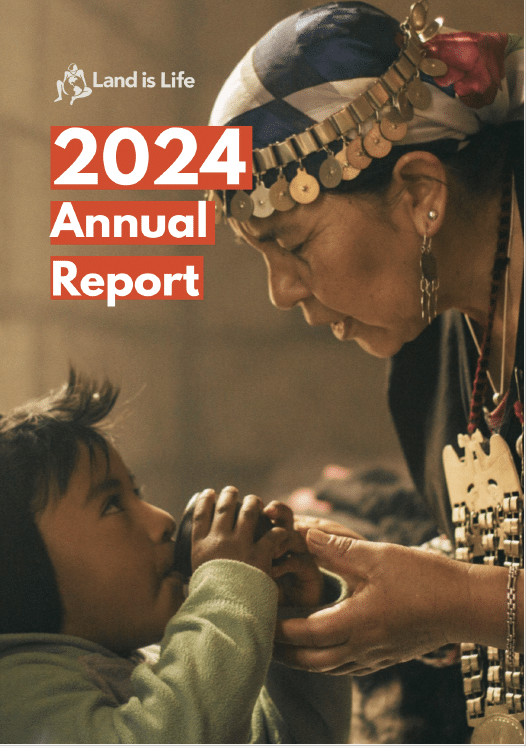
The Land is Life 2024 Annual Report highlights how Indigenous-led approaches advance self-determination by directing 91% of funding to Indigenous communities across 35 countries. Through protection of isolated peoples, support for human rights defenders, FPIC protocols, women’s leadership, and global advocacy, Land is Life strengthens Indigenous rights while advancing environmental sustainability.
Durante las primeras discusiones sobre la redacción de una Declaración de la ONU sobre los derechos de los Pueblos Indígenas, el Grupo de Trabajo de las Naciones Unidas sobre Poblaciones Indígenas ayudó a los Estados a comprender por qué el término “Pueblos” era más apropiado que “poblaciones”, “tribales” o “campesinos”.
During early discussions about drafting a UN Declaration on the Rights of Indigenous Peoples, the UN Working Group on Indigenous Populations helped states understand why the term "Peoples" was more appropriate than "populations," "tribals," or "peasants."
Dans le cadre du Programme des femmes autochtones, la bourse d'un an aide à nourrir la prochaine génération de femmes autochtones leaders en soutenant les femmes autochtones qui prennent des mesures innovantes qui contribuent à l'égalité des sexes, au bien-être de leurs communautés et à la reconnaissance de leurs droits à la terre et aux ressources.
Online course developed in collaboration between Land is Life and the University of Arizona, this course provides a learning opportunity for Indigenous women from across the seven socio-cultural regions to gain hands-on experience in engaging with and navigating the United Nations’ human rights system. Students will learn from high-level guest speakers, including UN Special Rapporteurs, Indigenous leaders, and distinguished scholars. Know more:
This document is the result of five webinars that represented an opportunity to build the capacity and knowledge of Indigenous women and youth for their participation in COP16 taking place from October 21st to November 1st, 2024 in Cali, Colombia, discussing the main agenda items and the role of Indigenous Peoples in the upcoming negotiations:
Este documento es el resultado de cinco seminarios web que representaron una oportunidad para desarrollar la capacidad y los conocimientos de las mujeres y jóvenes Indígenas para su participación en la COP16 que tendrá lugar del 21 de octubre al 1 de noviembre de 2024 en Cali, Colombia. Estos son los temas a discutir y el papel de los pueblos indígenas en las próximas negociaciones:
Under the Indigenous Women’s Program, the year-long fellowship helps to nurture the next generation of Indigenous women leaders by supporting Indigenous women who are taking innovative actions that contribute to gender equality, the well-being of their communities, and the recognition of their land and resource rights.

En el marco del Programa de Mujeres Indígenas, la beca de un año de duración ayuda a nutrir a la próxima generación de mujeres líderes Indígenas al apoyar a mujeres Indígenas que están tomando medidas innovadoras que contribuyen a la igualdad de género, el bienestar de sus comunidades y el reconocimiento de sus derechos sobre la tierra y los recursos.
17 funders announced a historic US$1.7 billion Pledge at COP26, in 2021, to advance forest tenure rights in tropical forest countries between 2021-2025. In anticipation of a Pledge 2.0 announcement, a group of 45 Indigenous Peoples’ organizations from Africa, Asia, Latin America, the Arctic and the Pacific provide strategic recommendations and thoughtful insights to inform and strengthen Pledge 2.0 discussions and outcomes. To read full recommendations:
17 financiadores anunciaron un compromiso histórico de US$1.7 mil millones en la COP26, en 2021, para avanzar en los derechos de tenencia forestal en países con bosques tropicales entre 2021 y 2025. En anticipación del anuncio de una Promesa 2.0, un grupo de 45 organizaciones de Pueblos Indígenas de África, Asia, América Latina, el Ártico y el Pacífico proporcionan recomendaciones estratégicas e ideas para informar y fortalecer los debates y resultados de la Promesa 2.0. Para leer las recomendaciones completas:
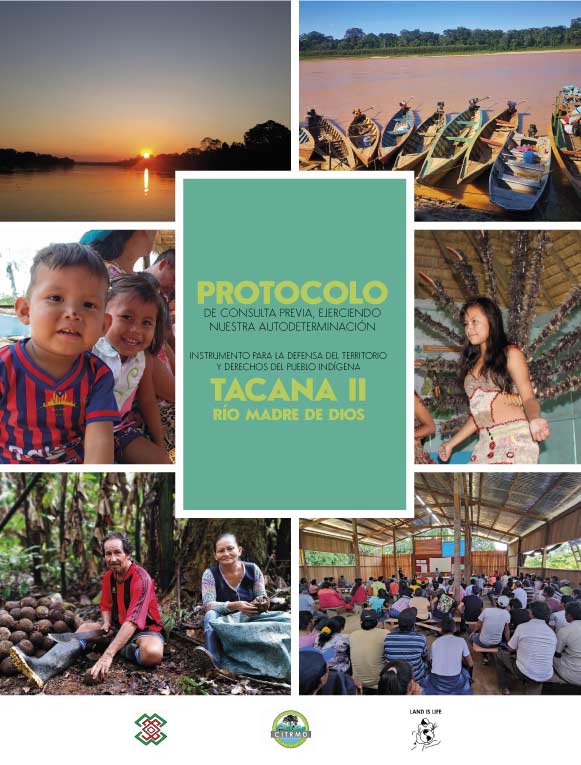
Land is Life, through its Free, Prior, and Informed Consent (FPIC) Program, provided technical and financial support to the Tacana Río Madre de Dios community in developing their FPIC Protocol. This protocol, approved by the community's Assembly, serves as a crucial framework for guiding intercultural dialogue between the Tacana people and external parties. It clearly states that failure to adhere to this protocol constitutes a violation of their rights and threatens their way of life, culture, and identity.
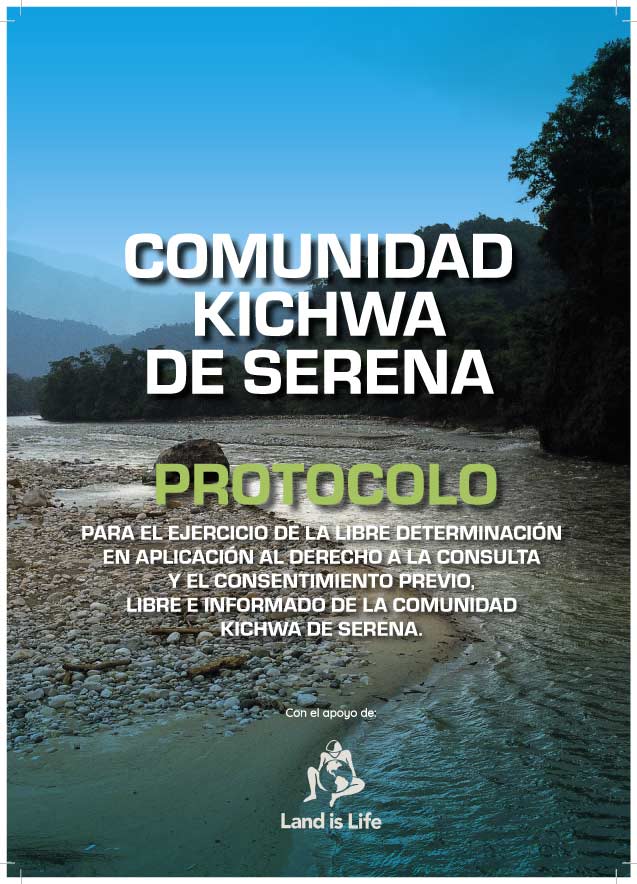
Land is Life, through its Free, Prior, and Informed Consent (FPIC) Program, provided technical and financial support to the Tacana Río Madre de Dios community in developing their FPIC Protocol. This protocol, approved by the community's Assembly, serves as a crucial framework for guiding intercultural dialogue between the Tacana people and external parties. It clearly states that failure to adhere to this protocol constitutes a violation of their rights and threatens their way of life, culture, and identity.
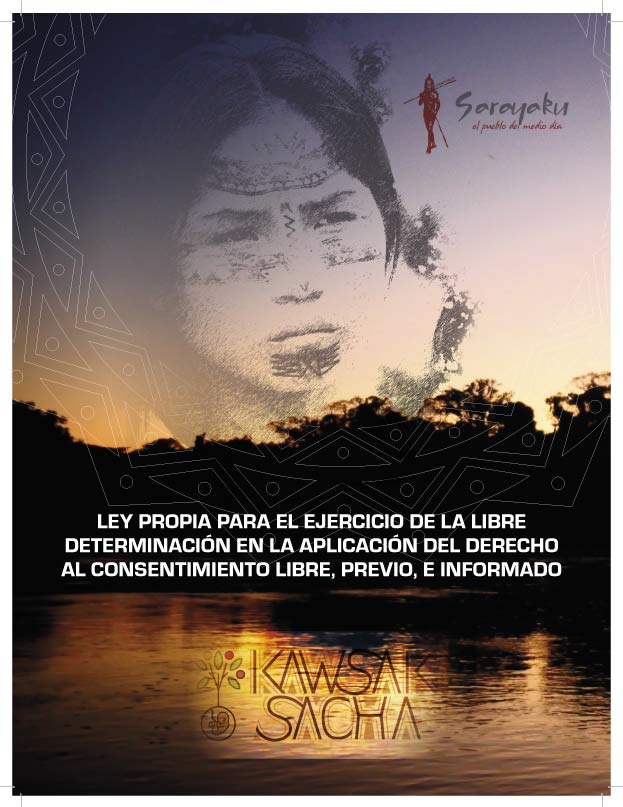
Through its Free, Prior, and Informed Consent (FPIC) Program, Land is Life provided technical and financial assistance to the Kichwa People of Sarayaku in developing their autonomous FPIC Law. This protocol serves as a vital tool for fostering democratic relations and intercultural dialogue with the State and other stakeholders concerning their territory and priorities for “Good Living” (Sumak Kawsay). Moreover, the protocol reinforces their vision of life and emphasizes the State's obligation to uphold and guarantee their human rights.
This publication explores the perspectives and reflections of the Wayuu Indigenous Peoples' communities regarding the impact of energy projects in La Guajira. It delves into the significance of the energy transition in their territories, highlighting both the challenges and opportunities for achieving a just transition that is inclusive and respectful of their cultural values.
Between April 2020 and April 2021, Land is Life collaborated with the Colectivo De Geografía Crítica De Ecuador to develop an interactive map showcasing the autonomous initiatives of Indigenous Peoples in the Amazon Basin (Ecuador, Brazil, Bolivia, Colombia, Peru, and Venezuela) in response to COVID-19. As part of this initiative, a report was submitted in February 2021 to the United Nations Special Rapporteur on the Rights of Indigenous Peoples. The report provides detailed context for each country, highlights specific cases of Indigenous Peoples in highly vulnerable situations, and offers general recommendations to the States for effective recovery efforts.
In 2021, Land is Life collaborated with the Centro de Estudios Jurídicos e Investigación Social (CEJIS) to produce a comprehensive report on the situation of Indigenous Peoples in Voluntary Isolation (PIACI) within Bolivia. The report examines the potential for recognizing the territories of these Indigenous groups and highlights the challenges they face. Following the report's development, members of our Latin America team traveled to Bolivia in September 2021 to present the findings in person. The report was shared with grassroots partners and Indigenous communities living along the Paraguay-Bolivia border, fostering dialogue and awareness about the unique challenges faced by PIACI.
In collaboration with our partner, the Organization of Indigenous Peoples in Suriname (OIS), Land is Life produced a report in March 2021 focusing on Indigenous Peoples in Voluntary Isolation and Initial Contact (PIACI) in Suriname. This report was submitted to the Third Cycle Universal Periodic Review of the UN Human Rights Council, highlighting the unique circumstances and challenges faced by these communities and advocating for their recognition and protection under international human rights frameworks.
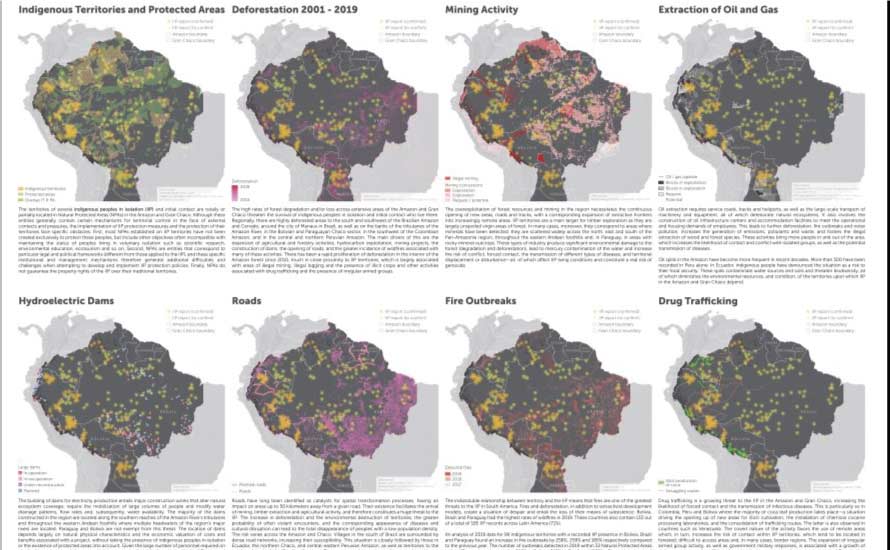
With the launch of the GTI-PIACI website, Land is Life, serving as the Secretariat, successfully completed, published, and presented eight detailed maps highlighting the territories of Indigenous Peoples in Voluntary Isolation (PIACI). These maps visualize various threats to PIACI territories, including: Protected Areas, Deforestation, Mining Activity, Oil and Gas Extraction, Hydroelectric Dams, Roads, Heat Sources from Fires, and Forest Concessions. By illustrating these threats, the maps aim to raise awareness and support efforts to protect these vulnerable Indigenous communities and their environments.
On November 12 and 13, 2020, the International Meeting on Free, Prior, and Informed Consent (FPIC) and Consultation Protocols of the Indigenous Peoples of Abya Yala took place in Quito. This book compiles a diverse array of perspectives and experiences discussed during the meeting, focusing on the FPIC debate. It aims to inspire Indigenous Peoples to develop their own tools to defend their right to self-determination, protect their territories, and preserve their traditional ways of life.
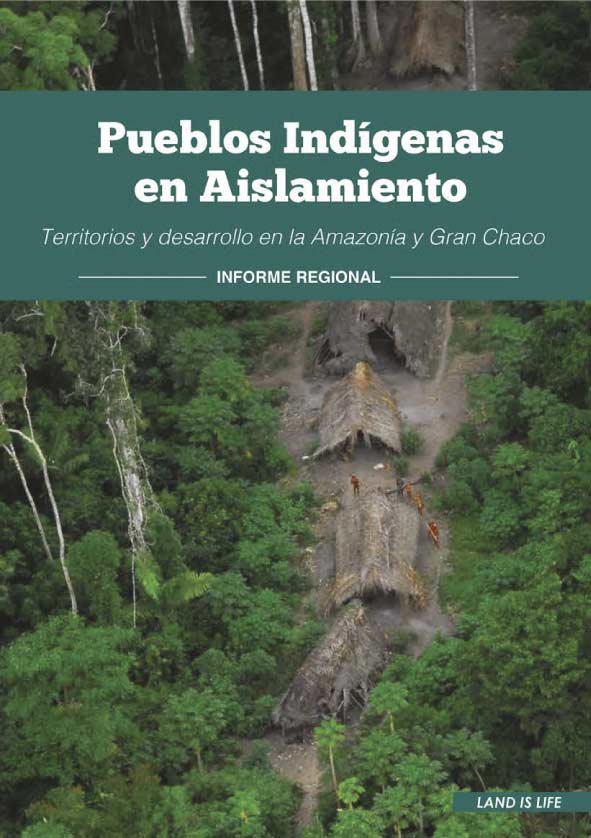
With the launch of the GTI-PIACI website, Land is Life, serving as the Secretariat, successfully completed, published, and presented eight detailed maps highlighting the territories of Indigenous Peoples in Voluntary Isolation (PIACI). These maps visualize various threats to PIACI territories, including: Protected Areas, Deforestation, Mining Activity, Oil and Gas Extraction, Hydroelectric Dams, Roads, Heat Sources from Fires, and Forest Concessions. By illustrating these threats, the maps aim to raise awareness and support efforts to protect these vulnerable Indigenous communities and their environments.
Land is Life has a long history of supporting Indigenous Peoples and allied organizations in defending their rights. This report, developed by Luis Jacobo Corral Fierro and Francisco Hurtado, provides a thorough assessment of the impacts associated with the development of a mega-mining district in the Cordillera del Cóndor, Ecuador. It examines the sociocultural, economic, territorial, and historical aspects of the conflict in Nankints and challenges the misleading narratives propagated by the government, which portrayed the Shuar people as violent, paramilitary, and terrorist. The report advocates for the demilitarization of Shuar territory and seeks reconciliation for the damages inflicted by the Ecuadorian armed forces' actions, aiming to rectify the injustices faced by the Shuar community.
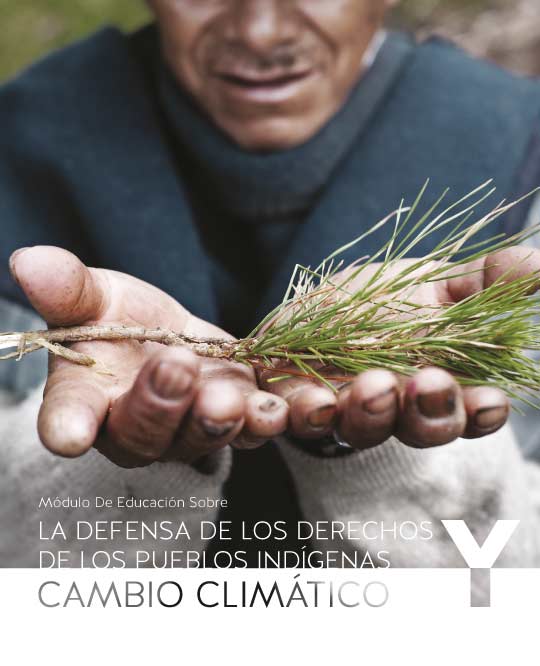
This Education Module on Indigenous Peoples and Climate Change is the result of a multi-year collaboration with the Cordillera Peoples Alliance (CPA) and the Asia Pacific Indigenous Youth Network, and is also informed by the experiences of Land is Life’s inaugural cohort of Climate Change Fellows in 2014. The module addresses the urgent need for comprehensive information and critical analysis of climate change impacts on Indigenous Peoples. It is designed to equip Indigenous communities with fundamental knowledge necessary for their effective and meaningful engagement in climate change debates, negotiations, and social movements