By Killa Becerra, Land is Life Coordinator of the Amazon Basin
“In the Amazon, defending the territory is defending life itself; we feel deep pain for every hectare lost, every river that disappears, and every family displaced.”
The words of a Traditional Doctor from the Cofán Indigenous People in Colombia are not a metaphor. They describe a daily reality across the Amazon Basin, where forests fall to illegal mining and logging, rivers are poisoned, armed actors expand their control, and Indigenous defenders are threatened or killed for protecting their lands.
Yet amid this violence, Indigenous Peoples are not retreating. They are organizing.
For Indigenous Peoples’ communities across the Amazon, security does not begin with police or military forces. It begins with the territory itself: with collective governance, ancestral knowledge, vigilance over rivers and forests, and the protection of community members who raise their voices.
A Different Understanding of Security
At Land is Life, we see security as sovereignty in action. The Indigenous-Led Security Program is based on a simple truth: those who inhabit and govern the territory understand its risks better than anyone else.
Security, therefore, cannot be imposed from outside. It must strengthen Indigenous Peoples’ autonomy, reinforce existing systems of governance, and provide flexible resources that allow communities to respond quickly and strategically.
In 2025, as extractive expansion, illegal economies, and armed violence intensified across the Amazon Basin, this vision translated into 88 rapid emergency responses in less than 36 hours, protecting Indigenous defenders at imminent risk. These actions safeguarded more than 35,000 Indigenous defenders, including over 16,000 Indigenous women, from 65 Indigenous Peoples and strengthened 69 Indigenous Peoples’ organizations, reinforcing territorial governance, collective protection systems, and Indigenous-led responses throughout the region.
Behind each number is a story.
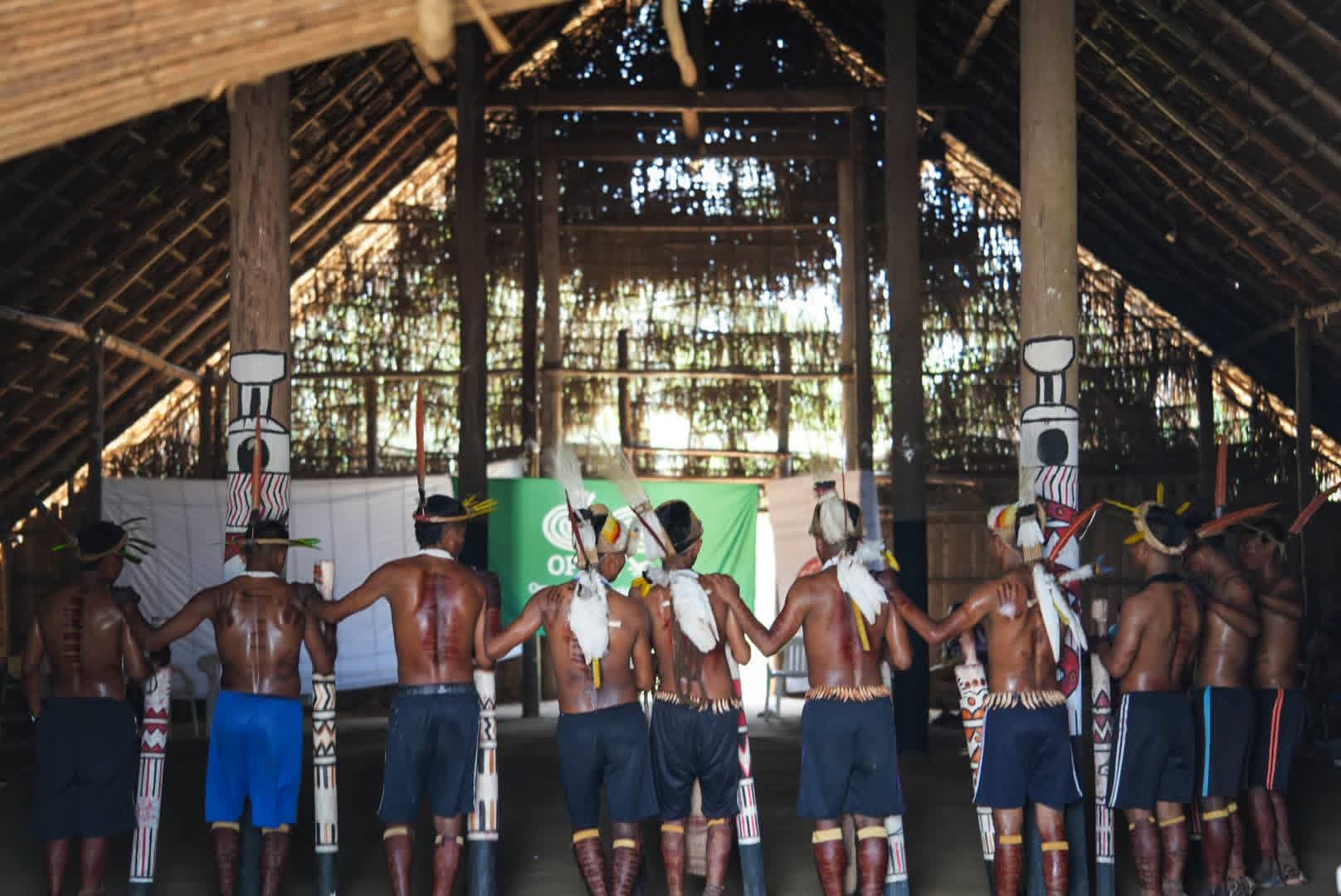
It tells of Indigenous Peoples’ communities reclaiming control over their safety, mapping their territories, monitoring incursions, and standing guard over forests and rivers. It speaks of women who, despite intimidation and violence, lead assemblies and protection efforts. Of Indigenous youth using secure communication tools to document threats and counter disinformation. And of organizations building community-based alert systems and collective strategies that allow them to act swiftly when danger approaches.
Coshikox Consejo Shipibo Konibo Xetebo (COSHIKOX) an Indigenous Peoples’ organization in Peru described what this support meant:
“This support have been fundamental in strengthening our communities’ capacity for self-management, promoting the conservation of our culture and protecting our ancestral territories. These activities have not only benefited our members, but strengthened respect for Indigenous Peoples’ rights.”
Protection as a Collective Process
The fund operates on multiple levels.
When a defender faces imminent threats, emergency funds can support temporary relocation, medical care, or legal assistance. In the medium term, communities strengthen collective systems: territorial patrols, early warning mechanisms, internal governance processes, and physical and digital security training. In the long term, advocacy efforts seek recognition of Indigenous Peoples’ protection systems as legitimate and effective within national and international policy frameworks.
Security, in this sense, is not an isolated intervention. It is a continuous process that links land, culture, leadership, and autonomy.
Women at the Center
Nearly half of those directly reached in 2025 were Indigenous women. This is not incidental.
Indigenous women defenders often face differentiated risks, including gender-based violence and exclusion from decision-making spaces. Investing in their leadership strengthens entire communities. It reinforces cultural continuity, territorial cohesion, and intergenerational resilience.
Challenges and Hope
The challenges remain severe. Illegal mining, narcotrafficking, and deforestation continue to expand. Protection mechanisms are often weak or poorly implemented. Connectivity gaps limit safe communication in remote areas.
And yet, there is also momentum.
Indigenous Peoples’ agendas are gaining visibility in global spaces.A new generation of Indigenous communicators is combining ancestral knowledge with digital tools. Regional Amazonian networks are deepening coordination across borders.
The lesson is clear: when Indigenous Peoples are trusted with direct resources and decision-making power, protection becomes more effective and more sustainable.
Protecting the Amazon Means Strengthening Self-Determination
In 2025 alone, 88 rapid emergency responses helped protect thousands of Indigenous lives, strengthen governance structures, and safeguard territories across the Amazon.
At the heart of this work are clear strategic priorities:
- Direct, intermediary-free funding, so Indigenous organizations can access flexible resources without burdensome bureaucracy.
- Comprehensive protection for defenders, including legal, medical, psychosocial, and collective protection mechanisms.
- Strengthening Indigenous women’s leadership, recognizing the differentiated risks they face and their central role in territorial sustainability.
- Digital security and information protection, equipping communities to respond to surveillance, disinformation, and technological threats.
Defending the Amazon is not only about conserving trees. It is about strengthening self-determination, protecting cultures, and ensuring the right to live with dignity, where the forest stands, life stands.